
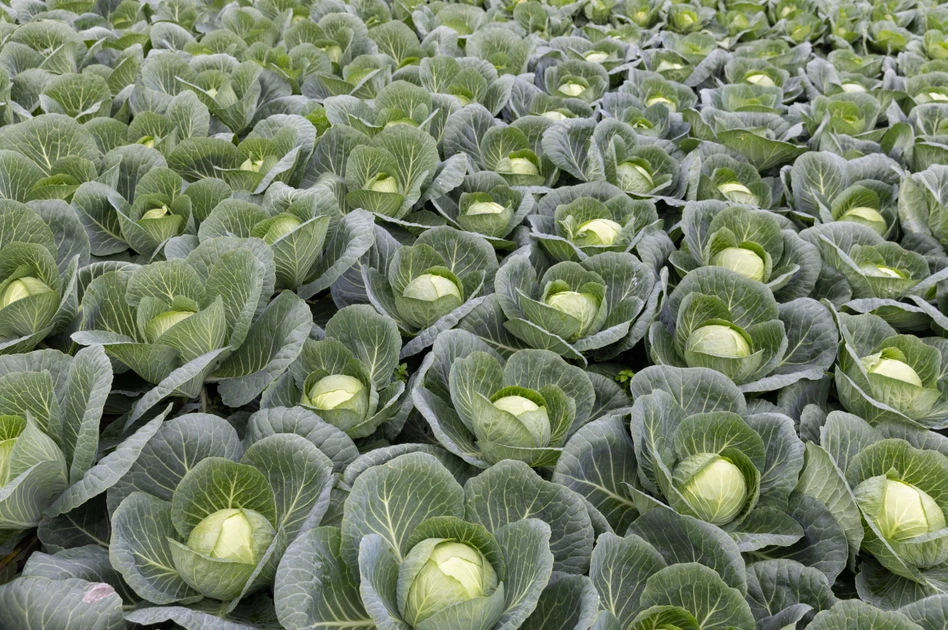
Aphids on Winter Greens
Oct 05, 2026
Aphids remain active on greenhouse greens throughout winter, even as crop growth slows. On leafy crops, aphids create more than a plant health issue. Live insects, cast skins, and sticky honeydew can end up directly on the harvested product, affecting marketability and increasing cleaning labor. Because aphids reproduce quickly and generations overlap, small populations can become widespread before they are noticed. This article outlines a practical biological control program for aphids on winter greens, including scouting, identification, beneficial selection, and application timing.
Start with a fixed scouting route, walked on the same day each week. Mark a set of plants in each bed or bench and check the same ones every time so your numbers can be compared from week to week. On each marked plant, inspect the growing point and the undersides of leaves, and record three things: live aphids, white cast skins, and shiny or sticky honeydew. Hang yellow Horiver Sticky Traps near doors, vents, and bed ends to monitor winged aphids moving through the house. Record aphid counts on each plant and the number of marked plants with any aphids present. Tips and Tricks for Scouting in IPM covers how to build a scouting route your crew can repeat consistently.
Identifying Aphids on Winter Greens Before You Order
Identify aphids by examining the insects themselves rather than by the crop they are feeding on. Aphid species are not limited to particular host plants, so the crop alone does not reliably indicate which aphid species is present. Collect samples from several colonies throughout the greenhouse and examine them with a hand lens.
The most useful detail to record is aphid size because different parasitoids target different aphid groups. Aphipar-M contains Aphidius matricariae, a parasitic wasp for small to medium aphids, including green peach aphid. Ervipar contains Aphidius ervi, a parasitic wasp used against larger aphid species. If both sizes are present, the two can be applied together to provide broader coverage. If identification is uncertain, the Green Peach Aphid Quick ID guide is a useful reference.
Removing Aphid Sources In and Around the Crop
Several common aphid sources are worth addressing before and during production. Weeds under benches and around greenhouse perimeters can serve as reservoirs for aphids, so remove them and keep these areas clean. Crop residue from previous plantings can carry aphids into the next crop and should be removed from the greenhouse rather than left in aisles. Incoming transplants can also introduce aphids, so inspect trays before placing them near production benches.
These steps do not replace a biological control program, but they reduce the number of places aphids can originate from and help beneficial insects work more effectively.
The Biological Program for Aphids on Winter Greens: Wasps, Lacewings, and Support
Parasitic wasps form the foundation of most aphid programs on winter greens because they actively search throughout the crop and continue working as new aphid colonies develop. Successful programs rely on repeated introductions rather than a single release. Weekly or every-other-week applications for two to four weeks are commonly used to establish consistent pressure on aphid populations.
The wasps arrive as mummies, which are parasitized aphids containing developing parasitoids. Place mummies in release boxes or on a dry, protected surface within the crop canopy. Keep them dry and undisturbed. Adult wasps typically begin emerging within one to three days.
Chrysopa works alongside the parasitoids by providing direct predation. It contains green lacewing larvae that actively crawl through colonies and feed on aphids. Apply larvae directly onto foliage near the colonies found during scouting so they can begin hunting immediately.
Match the program to what scouting reveals. When aphids are limited to a few scattered colonies, begin with parasitoid releases on a weekly or every-other-week schedule and apply Chrysopa directly to visible colonies.
As pressure increases and aphids become established on a larger portion of the crop, continue parasitoid releases and Chrysopa applications while adding Aphidend. Aphidend contains gall midge pupae whose larvae feed aggressively on aphids. It functions as a supporting tool alongside parasitoids rather than a stand-alone solution.
When multiple hot spots exist throughout the greenhouse, maintain weekly parasitoid releases, continue Chrysopa, and add both Aphidend and Aphidalia. Aphidalia contains ladybug larvae that can be concentrated directly into heavily infested areas to help reduce established colonies more quickly.
Schedule, Temperature Checks, and Records
Check greenhouse temperatures before selecting beneficials. Aphipar-M is most effective between 59 and 77°F. Chrysopa performs best from 68 to 86°F, and cooler conditions slow larval activity. Record both daytime and nighttime canopy temperatures for at least a week. If conditions consistently fall outside those ranges, contact us before ordering so the program can be tailored to your environment.
Once releases begin, continue walking the same scouting route each week. Look not only for live aphids but also for evidence that your beneficials are working. Brown, leathery aphid mummies typically begin appearing ten to fourteen days after parasitoid releases and indicate successful parasitism. Record aphid counts, the number of marked plants with aphids, and the number of mummies observed. Trends over time are generally more useful than a single week's count.
If aphid populations remain stable or continue increasing after multiple scouting cycles, maintain weekly parasitoid releases and increase support from Chrysopa, Aphidend, or Aphidalia as appropriate.
If a heavy aphid population needs to be reduced before beneficials are introduced, an essential oil knockdown can be used first, allowing residues to dry before releases are made. Isarid adds a fungal mode of action against aphids and is compatible with parasitoid programs. Combining Beneficials with Sprays explains how to sequence biologicals and compatible products.
Once aphid pressure has been reduced to low levels, transition to a maintenance program of less frequent releases while continuing weekly scouting. Consistent monitoring remains the most important tool for preventing populations from rebuilding. Weekly and every-other-week delivery options are available for parasitoids and Chrysopa, making it easier to align releases with your scouting schedule. For additional biological control options, visit the Greenhouse Growing page.
Related Articles
How to Solve Aphids
Aphipar-M: Aphidius matricariae Aphid Parasitoid Mummies
Chrysopa: Green Lacewing Larvae for Aphid and Mixed Pest Control
