
Mealybugs and Scale
Mealybugs (family Pseudococcidae), soft scales (family Coccidae) and armoured scales (family Diaspididae) form three important families within the superfamily Coccoidea. This superfamily belongs to the order Hemiptera (the true bugs). The Coccoidea, along with aphids and whiteflies, belong to the division Sternorrhynchae (commonly referred to as plant lice).
-
 Chrysopa
Chrysopa (Chrysoperla carnea) — Green Lacewing Larvae for Aphid & Mixed Pest ControlChrysopa contain…
Use For Aphids, MealybugsSpecies Chrysoperla carnea$65.52 -
 Isarid Mycoinsectide
General information When to use Isarid? Isarid™ works best in a pest management program designed…
Use For whiteflies, aphids, thrips, psyllids, mealybugs, leaf hoppers, plant bugs*, weevils*, grasshoppers*, Mormon crickets, locust, beetles, mites, bagrada bugs, lygus bugs, and fungus gnats*. *Not Registered for Use By California$231.70 -
 Cryptobug-L
Cryptobug L (Cryptolaemus montrouzieri) — Mealybug Destroyer LarvaeCryptobug L contains the larvae o…
Use For Mealybugs Spp.Species Cryptolaemus montrouzieri$154.09 -
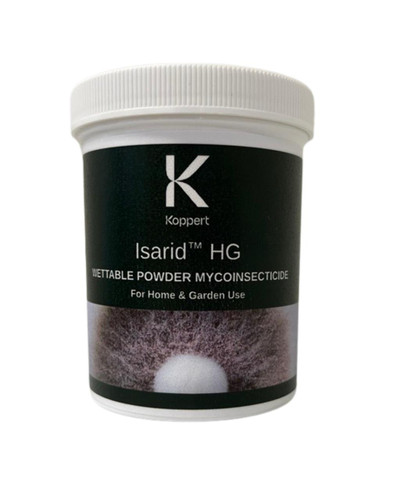 Isarid™ HG
Availability ISARID™ HG is currently registered for sale in the following states: WA, OR, AZ, IL, M…
Use For whiteflies, aphids, thrips, psyllids, mealybugs, leaf hoppers, plant bugs*, weevils*, grasshoppers*, Mormon crickets, locust, beetles, mites, bagrada bugs, lygus bugs, and fungus gnats*. *Not Registered for Use By California$24.50 -
 Cryptobug
Cryptobug (Cryptolaemus montrouzieri) — Mealybug Destroyer AdultsCryptobug contains adult beetles of…
Use For Mealybugs Spp.Species Cryptolaemus montrouzieri$343.06 -
 Rhyzobug
Rhyzobug (Rhyzobius lophanthae) — Armored Scale Predator Adults Rhyzobug contains adult beetles of R…
$125.50
More Information about Mealybugs and Scale
[↑ Back to Top]Mealybugs are small, soft‑bodied, sap‑feeding insects in the scale insect family (Pseudococcidae) that commonly affect houseplants, greenhouse crops, and ornamentals. They’re often found tucked into leaf joints, stem crevices, roots, or growing tips, where they feed on plant sap and excrete sticky honeydew that can lead to sooty mold and plant stress. Their waxy coating and hidden feeding sites make them persistent pests, which is why biological control is often an effective, long‑term approach
Scale insects are small, sap‑feeding pests that attach themselves to plant stems, leaves, or bark and protect their bodies with a waxy, shell‑like covering. Many species appear as immobile bumps rather than obvious insects, making them easy to miss until plant stress becomes visible. As they feed, scale insects weaken plants by removing sap, and some types also produce sticky honeydew that can lead to sooty mold buildup. Their protective coating makes them difficult to control with sprays alone, which is why natural predators and parasitoids play an important role in long‑term biological control programs
Armored scale and soft scale are two major groups of scale insects, and the distinction matters for identification and control. Armored scale produce a hard, shell‑like covering that is separate from their bodies and they do not produce honeydew. They typically stay fixed in one spot and feed on individual plant cells, which makes them especially difficult to control with contact sprays. Soft scale, by contrast, have a more flexible, leathery covering that is part of their body. They feed on plant sap in vascular tissues and often excrete honeydew, which can lead to sooty mold and ant activity. Because their biology and feeding behavior differ, effective biological control strategies can vary between armored and soft scale.
Identification is based on a combination of appearance, location, and plant symptoms. Mealybugs are small, soft‑bodied insects often seen clustered in protected areas such as leaf joints, along stems, around roots, or near new growth. They are covered in a white, powdery or cottony wax, and this same wax may be visible on the plant surface as residue or egg masses. Mealybugs move slowly but are mobile throughout their lives and can spread across a plant or to nearby plants over time, especially under warm conditions. Scale insects are typically noticed as waxy, shell‑like bumps attached to stems, leaves, or bark. Most become immobile once settled and blend closely into the plant surface, making them easy to overlook. Plant stress, gradual buildup along stems, or sticky residue from honeydew (in soft scale) are often what draw attention to their presence. Careful inspection of stems, leaf undersides, and growing points is key to early and accurate identification.
Mealybugs and scale are closely related sap‑feeding insects with life cycles that include eggs, a mobile crawler stage, and adults. The crawler stage is responsible for most movement and spread. Mealybugs remain mobile throughout life, with wingless females covered in white wax and small, winged males that are short‑lived, do not feed, and can fly, which explains how mealybugs may appear in new areas even though damaging stages move slowly. Scale insects differ in that adult females become permanently immobile once settled. In some scale species, males are also winged, but they are rarely seen and exist only briefly for reproduction.
Once mealybugs or scale are visible, the next step is matching the biological tool to the size and location of the problem. For small, localized hot spots on stems, leaf joints, or tight crevices, Cryptobug® larvae work well for targeted suppression of both mealybugs and scale. For larger areas or more widespread pressure, Cryptobug® adults provide broader coverage as they move and search across plants. For mealybugs concentrated in a central area of the plant, such as dense interior growth or the crown, Chrysopa (green lacewing) larvae are another effective option when released directly where mealybugs are present. All of these predators can be used alongside Isarid® (Isaria fumosorosea), an microbial spray that helps control mealybugs and scale while remaining compatible with beneficial insects. Combining targeted predators with Isarid supports more consistent pressure and improves overall biological control results.
Mealybugs are small, soft‑bodied, sap‑feeding insects in the scale insect family (Pseudococcidae) that commonly affect houseplants, greenhouse crops, and ornamentals. They’re often found tucked into leaf joints, stem crevices, roots, or growing tips, where they feed on plant sap and excrete sticky honeydew that can lead to sooty mold and plant stress. Their waxy coating and hidden feeding sites make them persistent pests, which is why biological control is often an effective, long‑term approach
Although most species of mealybug feed on the aerial parts of the plant, some species extract their nourishment from roots, whilst others are gall-formers. A few species can also transmit harmful viruses. Mealybugs inflict damage on the crop in various ways: Nymphs and females extract the sap from the plant, stunting growth and causing deformation and / or yellowing of leaves, sometimes followed by defoliation. The overall effect is a reduction of photosynthesis and therefore the yield. Flowers and fruit often drop off. Plant sap is rich in sugars, but low in proteins. In order to gain an adequate intake of protein, mealybugs must therefore ingest large quantities of sap, getting rid of the excess sugars in the form of honeydew. Characteristically, dark sooty moulds (Cladosporium spp.) are often found growing on this honeydew. Additionally, the white, waxy secretion of the mealybugs, reduces the ornamental value of the affected plants. Fruit and flowers are also fouled, rendering them unfit for sale, and the reduced level of photosynthesis in the leaves also reduces flower and fruit production. In ornamental crops, the mere presence of mealybugs is sufficient to render the product unfit for sale. A very small population can thus cause considerable economic damage.
