
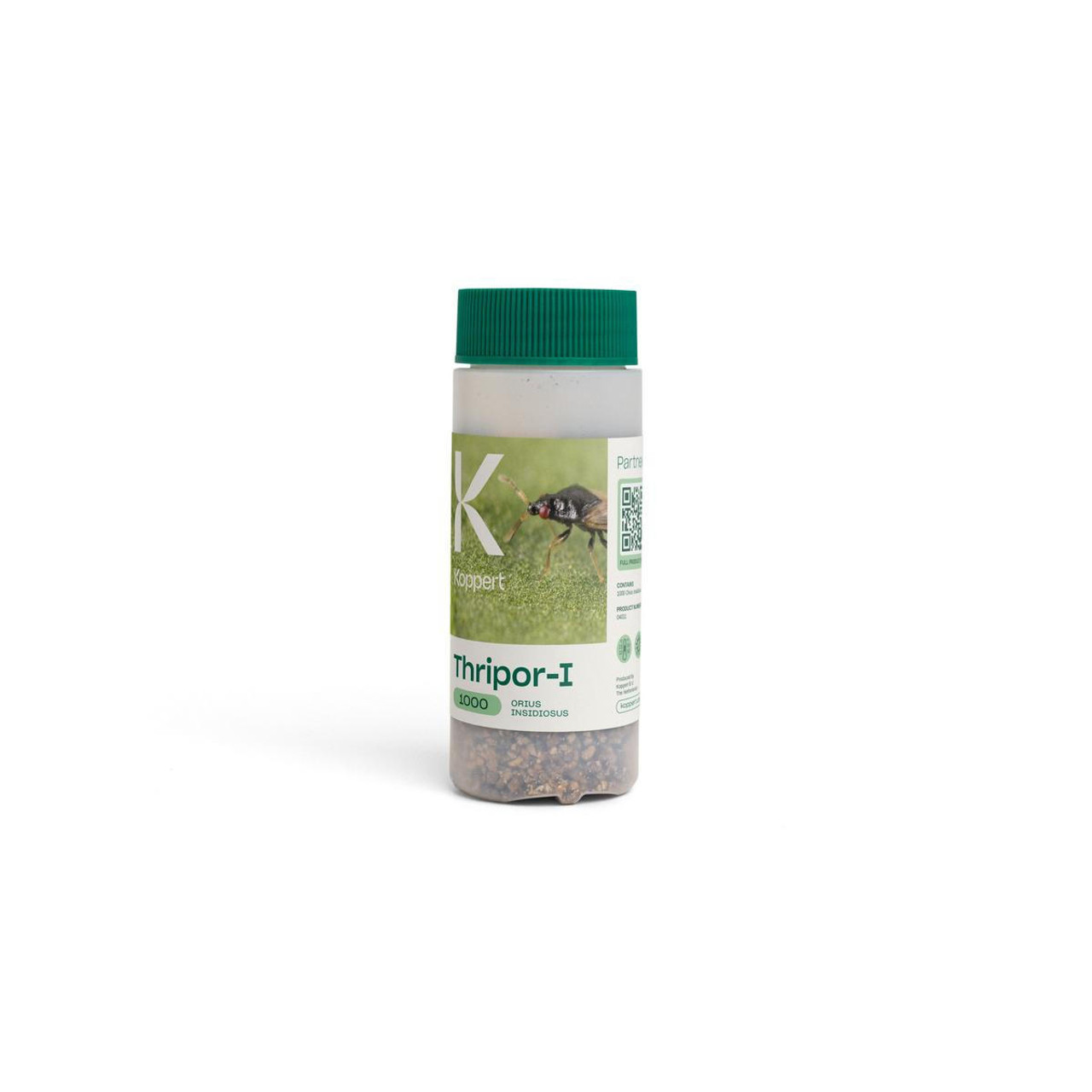

Thripor
Write a Review

Thripor
Thripor (Orius insidiosus) — Predatory Bug for Thrips Control
Thripor contains Orius insidiosus, a proven predator for controlling thrips. These predators actively hunt across plant surfaces piercing and consuming prey. Adults fly and disperse from release points to locate thrips throughout the area. Thripor is chemical-free and safe for use in any growing environment including greenhouses, nurseries, orchards, flower beds, interiorscapes, outdoor landscapes, indoor plants including houseplants and more.
Immediate release: Thripor begins feeding upon application
High mobility: Adults fly and move quickly to find prey across plants
Effective control: Targets thrips larvae and adults for reliable population reduction
Use For
Thripor targets thrips species, including:
Western flower thrips (Frankliniella occidentalis)
Onion thrips (Thrips tabaci)
Echinothrips americanus
Other common thrips species
How It Works
Mode of Action: Nymphs and adults pierce thrips larvae and adults with their mouthparts and consume the contents
Behavior: Predators hunt actively; adults fly and disperse to new feeding sites
Visual Effect: Empty thrips skins (exuviae) appear on leaves and petals as control builds
Feeding Rates
Adults consume ~10–20 thrips per day under favorable conditions
Nymphs focus on larval stages; adults handle both larvae and adults
Intake varies with prey density and plant structure
Application Notes:
Rotate gently before use
Apply directly onto leaves and flowers or place in Dibox release boxes near hotspots
Best Working Conditions
Temperature: Effective from 68–86°F; cooler conditions slow development
Humidity: Moderate to high RH supports activity and reproduction
Compatibility Guidance
For chemical compatibility details, check out our Natural Enemies - Chemical Compatibility Table and Beneficial Insect & Pesticide Compatibility Table
Allow residues from oils or soaps to dry before application
Product Specifications
Pack Size: 1,000 predators (mixed adults and nymphs)
Presentation: 100 mL bottle
Appearance: Adults are small, black with gray-white markings; nymphs are yellow-orange to brown
What to Expect
Thripor predators begin hunting immediately after release. Adults fly and disperse, extending coverage beyond initial application points. Control builds as predators spread through affected areas. Reapply per scouting to maintain control.
Recommended IPM Pairings
Thripex / Thripex-V (Neoseiulus cucumeris) to control early-stage larvae hidden in flowers and foliage, while Thripor hunts down adults and larger nymphs. Together, they break the thrips life cycle.
Entonem (Steinernema feltiae): For soil pupae control; complements Thripor’s foliar activity by targeting thrips life stages in the soil.
Isarid® Mycoinsecticide: Adds a fungal mode of action for mealybugs and soft scales in high-pressure zones; fully compatible with beneficials.
Dune™: Improves plant resilience against sucking pests, reducing overall pest pressure and supporting IPM longevity.
Essential Oil Knockdown (e.g., neem-based): For pre-release reduction of heavy mealybug populations; apply beneficials after residues dry.

Long-term storage, i.e. more than 48 hours, is not recommended. Apply promptly after receipt. Our products are shipped fresh for immediate use to ensure maximum performance. If needed, keep in a cool, dark, dry place for up to 1–2 days; longer holding reduces effectiveness and quality.
Thripor targets both larvae and adults..
Yes - Thripor includes adults and nymphs. Adults fly and disperse quickly.
Feeding starts immediately. Control builds quickly as predators move through affected areas.
Yes - Thripor is chemical-free and great for enclosed environments. Adults fly but remain where prey is present.
Other Products Growers Love
Thripex Plus Sachets (Neoseiulus cucumeris) — Predatory Mite for Thrips and Mite ControlThripex Plus…

Entonem (OMRI) — Steinernema feltiae - Nematodes for Soil and Foliar Pest Control Entonem contains t…

Swirskii-Mite PLUS Sachets (Amblyseius swirskii) — Predatory Mite for Thrips, Whiteflies & Pest Mite…

General information When to use Isarid? Isarid™ works best in a pest management program designed…

Horiver Yellow Sticky Discs — 18 cm Diameter - Monitoring & Trapping for Soil-Emerging PestsHoriver …

Limonica (Amblydromalus limonicus) — Predatory Mite for Thrips & WhitefliesLimonica bottles contain …

Entomite-M (Stratiolaelaps scimitus) — Soil-Dwelling Predator for Fungus Gnats & Thrips PupaeEntomit…
