
Fungus Gnats
Often dismissed as more of a nuisance in protected plant culture, fungus gnats can easily get out of control if not attended to. We’re not sure why, but growers tend to overlook the negative impact that feeding fungus gnat larvae can have on plant growth, health, and yield.
-
 Entomite-M
Entomite-M (Stratiolaelaps scimitus) — Soil-Dwelling Predator for Fungus Gnats & Thrips Pu…
Use For Thrips, Root Aphids, Fungus GnatsSpecies S. scimitus/H. miles$22.49 -
 Entonem (OMRI)
Entonem (OMRI) — Steinernema feltiae - Nematodes for Soil and Foliar Pest Control Entonem cont…
Use For Fungus Gnats, Thrips, Beetles, CaterpillarsSpecies S. feltiae$40.20 -
 Horiver Sticky Traps
Horiver Yellow Sticky Traps — 10-Pack (3.94" x 9.84") Monitoring & Trapping for Flying Ins…
Use For Aphids, Leaf Miners, Whiteflies, Thrips, Sciarids$10.69 -
 Atheta
Atheta — Dalotia coriaria (formerly Atheta coriaria)Dalotia coriaria, a species of rove beetle…
Use For Root Aphids, Fungus Gnats, ThripsSpecies Dalotia coriaria$141.96 -
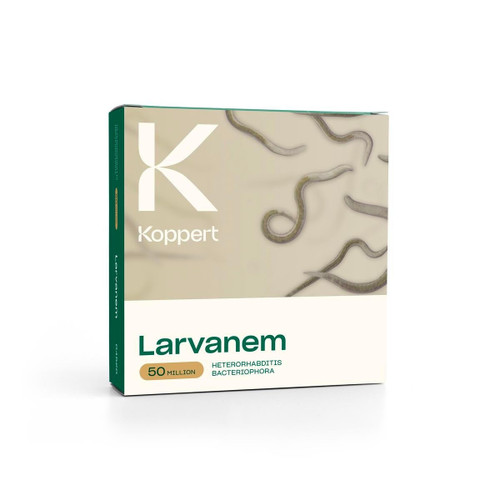 Larvanem
Larvanem — Heterorhabditis bacteriophoraLarvanem contains infective third-stage juveniles (L3)…
Use For Root AphidsSpecies H. bacteriophora$53.71 -
 Isarid Mycoinsectide
General information When to use Isarid? Isarid™ works best in a pest management program de…
Use For whiteflies, aphids, thrips, psyllids, mealybugs, leaf hoppers, plant bugs*, weevils*, grasshoppers*, Mormon crickets, locust, beetles, mites, bagrada bugs, lygus bugs, and fungus gnats*. *Not Registered for Use By California$231.70 -
 Capsanem (OMRI)
Capsanem — Steinernema carpocapsaeCapsanem contains infective third-stage juveniles (L3) of St…
Use For Caterpillars, Coleoptera, Flies, Fungus GnatsSpecies S. carpocapsae$40.20 -
 Knowing and Recognizing Book
Get the growers’ guide to biological crop protection Knowing and recognizing – The …
$201.27 -
 Horiver Discs
Horiver Yellow Sticky Discs — 18 cm Diameter - Monitoring & Trapping for Soil-Emerging Pes…
Use For Wrapping around plant's base to kill Root Aphids$73.68 -
 Atheta Bucket
Atheta — Dalotia coriaria (formerly Atheta coriaria)Dalotia coriaria, a species of rove beetle…
Use For Root Aphids, Fungus Gnats, ThripsSpecies Dalotia coriaria$415.60 -
 Horiver Sticky Traps (Yellow, Large)
Horiver Yellow Sticky Traps — Large Cards (9.84" x 15.75") - Monitoring & Trapping for Fly…
Use For Aphids, Leaf Miners, Whiteflies, Thrips, Sciarids$32.76
More Information about Fungus Gnats
[↑ Back to Top]Fungus gnats are small, mosquito‑like flies commonly associated with moist growing media. While the adults are mostly a nuisance, the larval stage is the primary concern. Fungus gnat larvae live in the upper soil profile, often near the surface or around drain holes, where they actively feed on fungi, decaying organic material, and live plant tissue, including fine roots. In propagation environments, larvae may also hollow out the stems of cuttings, disrupting root development and establishment. Fungus gnats thrive in wet, over‑watered conditions and are strongly associated with poor drainage. Beyond direct feeding damage, both larvae and adults are known vectors of plant diseases, a risk that is often underestimated. Larvae can transmit root pathogens such as Pythium, Fusarium oxysporum, Verticillium albo‑atrum, and Thielaviopsis basicola (black root rot) as they move through the growing media. Adult fungus gnats can also spread foliar diseases, including Botrytis, by carrying spores on their bodies. While fungus gnat adults and larvae are generally straightforward to control, sound irrigation practices and proper drainage are critical for long‑term prevention. When fungus gnats persist or return repeatedly, cultural conditions, especially excess moisture, are often the underlying cause.
Common signs of fungus gnats include slowed or stunted plant growth, adult gnats hovering near the soil surface, and larvae present in the growing media. Small gnats flying up when a plant is disturbed or being caught on sticky traps are also strong indicators.
The fungus gnat life cycle has 4 stages:Eggs are laid by adult females into the cracks and crevice of most soil, not directly on the soil surface. There are 4 larval stages, characterized by a black ‘head capsule’. The larvae feed on root hairs, the stems of unrooted cuttings, and organic material. They may be located near the top of the container, or the bottom. The pupal stage does not feed. Adult fungus gnats emerge after pupation, and are poor flyers. The life cycle takes between approximately 18 to 28 days, depending on temperature. Adults highly prefer wet soils to dry. Females can lay between 75 and 200 eggs in her lifetime. Adults are can easily be distinguished by their bead-like antennae, the the ‘Y’ shaped vein in their wings. Yellow sticky cards, or potato slices monitored every 48 hours, can be used to assess adult or larvae populations, respectively.
There are a few options for control of fungus gnats. Some growers prefer the use of Nematodes such as Stenernema feltiae, while others choose to use Stratiolaelaps scimitis. Both of these pair well with Dalotia coriaria to gain the upper hand on fungus gnats. Apply heavier amounts up front for 2-3 weeks in a row has been the most effective to overpower a cycling fungus gnat populations.
The same predators used to clean up a fungus gnat population can work very well as preventatives. The rate of application would be less, and you would only need to apply every 2-4 weeks to keep the population of beneficials at high levels.
