
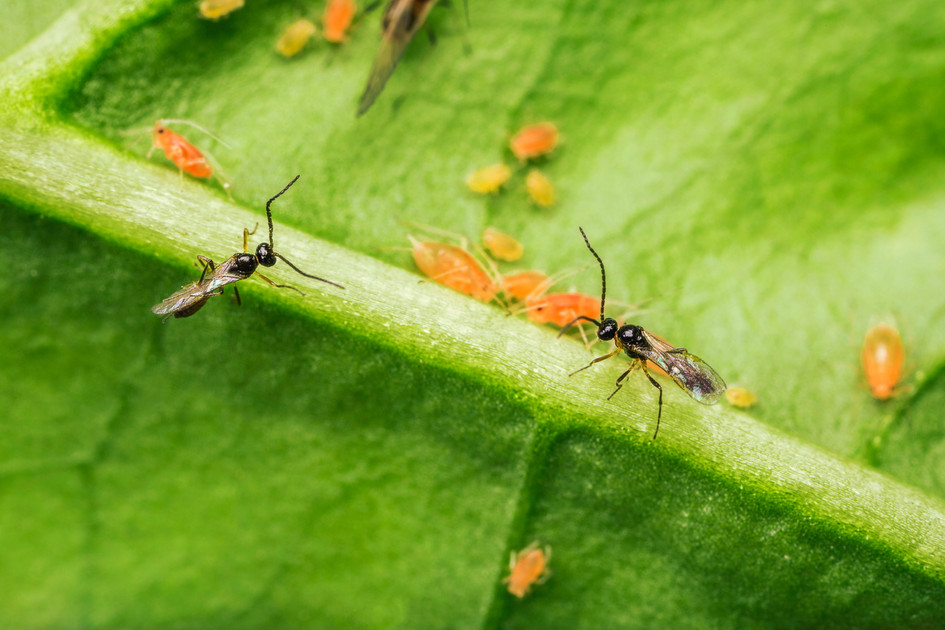
Green Peach Aphid (Myzus persicae): Quick ID and Biological Control
Jan 20, 2026
Green peach aphid drives sticky foliage, curled tips, and uneven growth across greenhouse ornamentals, vegetables, and plug/liner production. It establishes quickly in cooler or fluctuating houses and spreads by winged adults that move throughout the facility. A targeted, species‑right biological program keeps crops clean, uniform, and finish‑ready without disrupting your IPM system.
Quick ID: How to Recognize Green Peach Aphid Fast
Appearance:
Small, soft‑bodied, typically green to yellow‑green
Can appear pale or slightly pinkish depending on crop and nutrition
Cornicles (“tailpipes”) slender and pale
Where it shows up
New growth, young stems, expanding leaves
Buds, growing tips, and the underside of mid‑canopy leaves
Propagation zones and cool‑morning benches are common hotspots
Plant symptoms
Curled or twisted new growth
Sticky honeydew on leaves and trays
Slowed growth and uneven flushes
Sooty mold where honeydew accumulates
Leaf yellowing from sustained sap removal
Winged adults
Expect winged adults during temperature shifts or canopy crowding. These disperse rapidly and will show up on Horiver yellow cards, especially at:
Bench edges
Gables and perimeter zones
Doorways and air movement paths
Why Green Peach Aphid Is a High‑Priority Problem in Greenhouses
Highly mobile: winged forms spread new problem zones quickly
Temperature‑adaptive: strong performance in cooler houses and shoulder seasons
Polyphagous: attacks a wide range of crops (vegetative and flowering)
Honeydew‑heavy: increases labor for cleanup and scouting
Distortion‑prone: visible quality issues on tender, salable growth
The greenhouse environment provides soft new tissue, steady humidity, and continuous host availability—ideal for rapid build‑up.
Biological Control That Works
A reliable program uses a clear structure:
Knockdown (optional, only if pressure is heavy)
Species‑right parasitoids to reduce aphid populations and maintain control
Aphidend for curative action in hotspots
Monitoring + weekly cadence to prevent rebuilds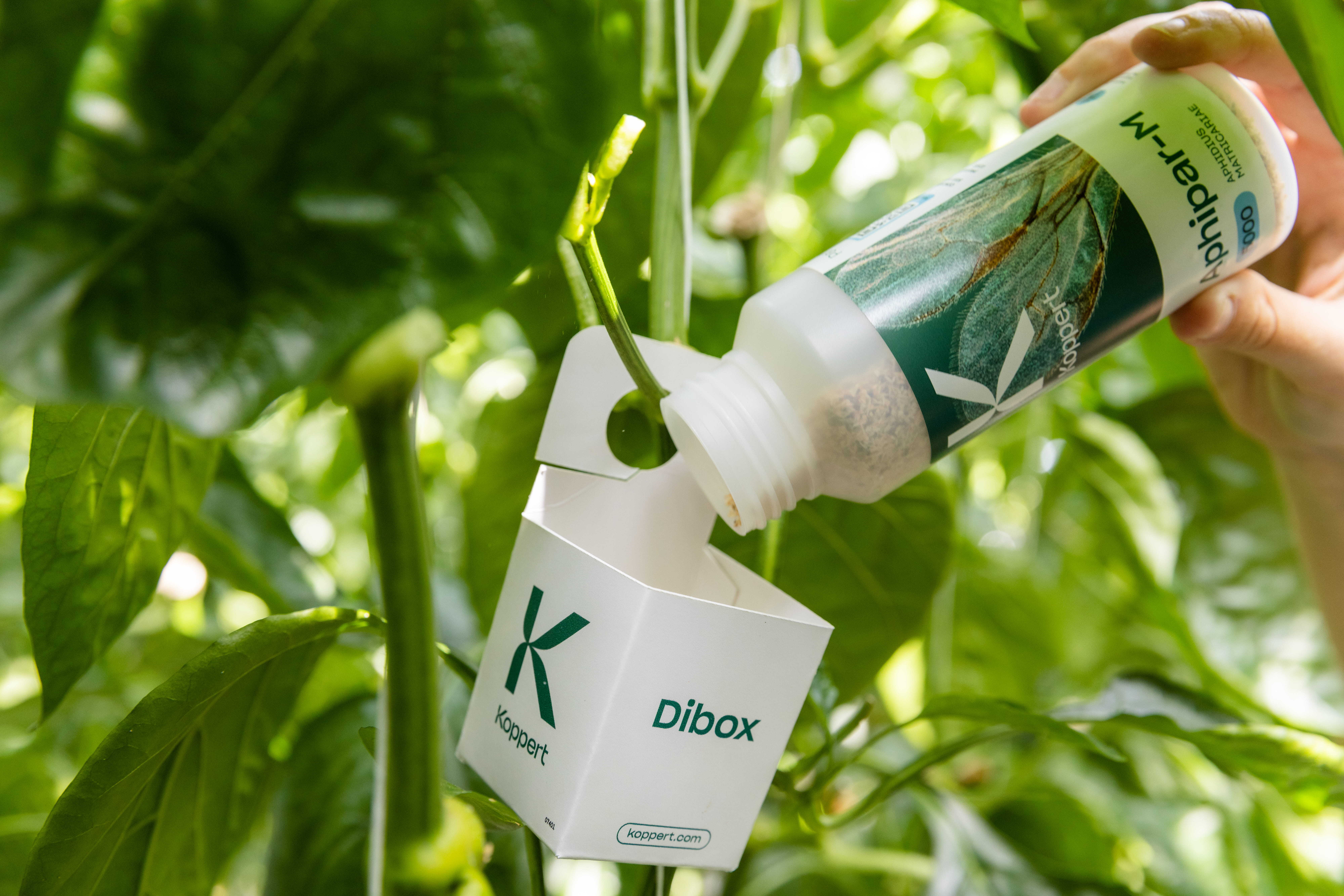
STEP 1 — Optional Knockdown (If Pressure Is Heavy)
Use a knockdown when:
Leaves are sticky throughout the canopy
Visible clusters are spread across multiple benches
You need quick reduction before parasitoids are introduced
Suitable knockdown tools
Neem oil (light coverage; avoid overspray on sensitive foliage)
Insecticidal soap (underside focus)
Isarid (mycoinsecticide) for compatible soft‑bodied control
Timing is Crucial
Spray before releasing beneficials
Wait 3–5 days (or one irrigation cycle)
Resume with parasitoids + Aphidend afterward
Avoid knockdown sprays after beneficials are released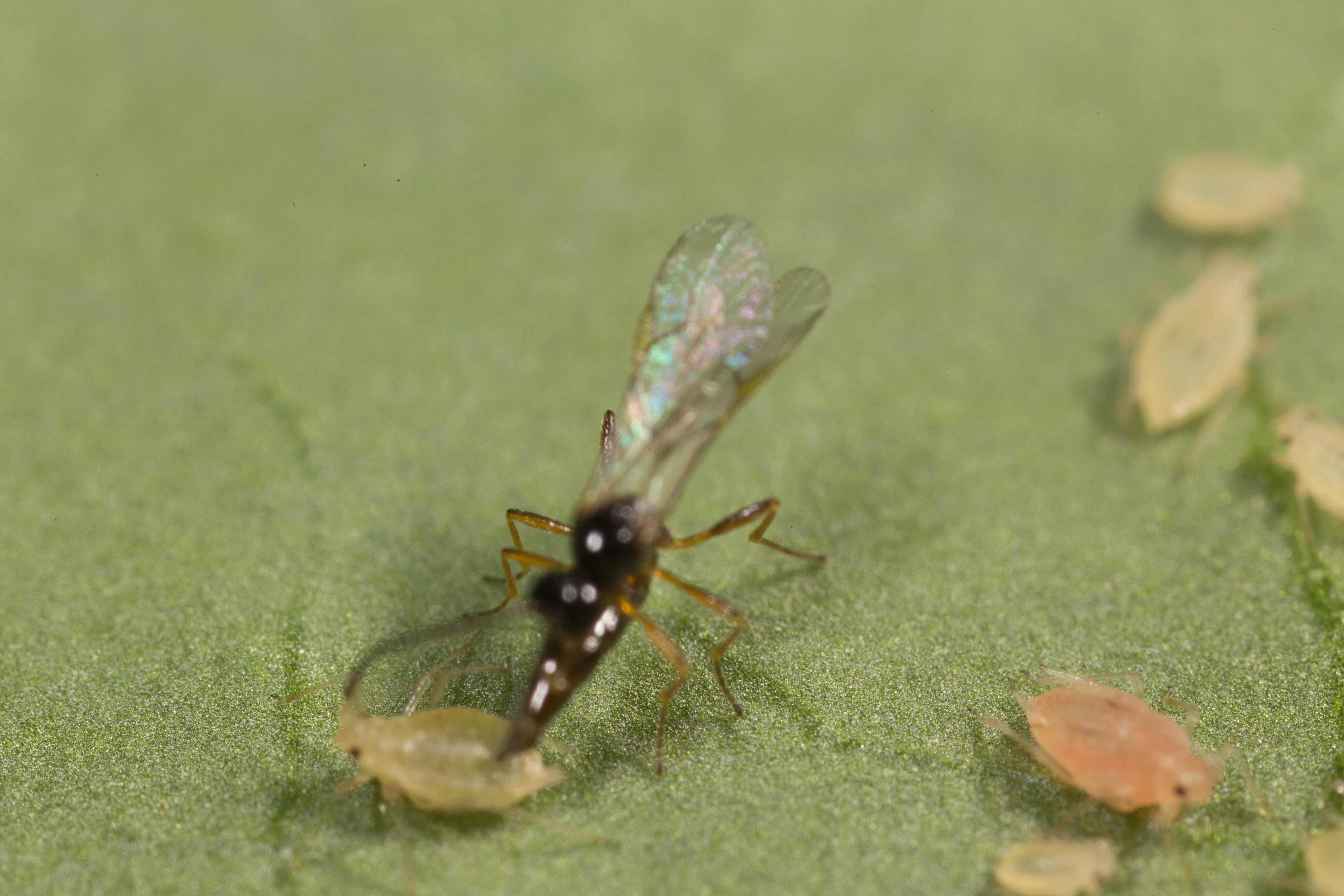
STEP 2 — Parasitoids: Your Primary Green Peach Aphid Control Tools
Aphipar‑M (Aphidius matricariae) —The preferred parasitoid for confirmed green peach aphid (Also a great choice if the Aphid can not be indentified or if there are multiple varieties present)
Best Working Conditions: Most effective between 59 and 77°F. Effectivity is reduced at temperatures above 82°F. For temperatures over 82°F check out Aphipar below.
Benefits:
Strong performance, even at lower temperatures
Efficient searching behavior, able to fly to locate where aphids are
Tan-Brown mummies make scouting accurate and fast
Cadence:
Weekly releases until pressure drops and mummies appear consistently. Cadence matters more than load. Weekly releases prevent population resurgence from newly arriving winged adults.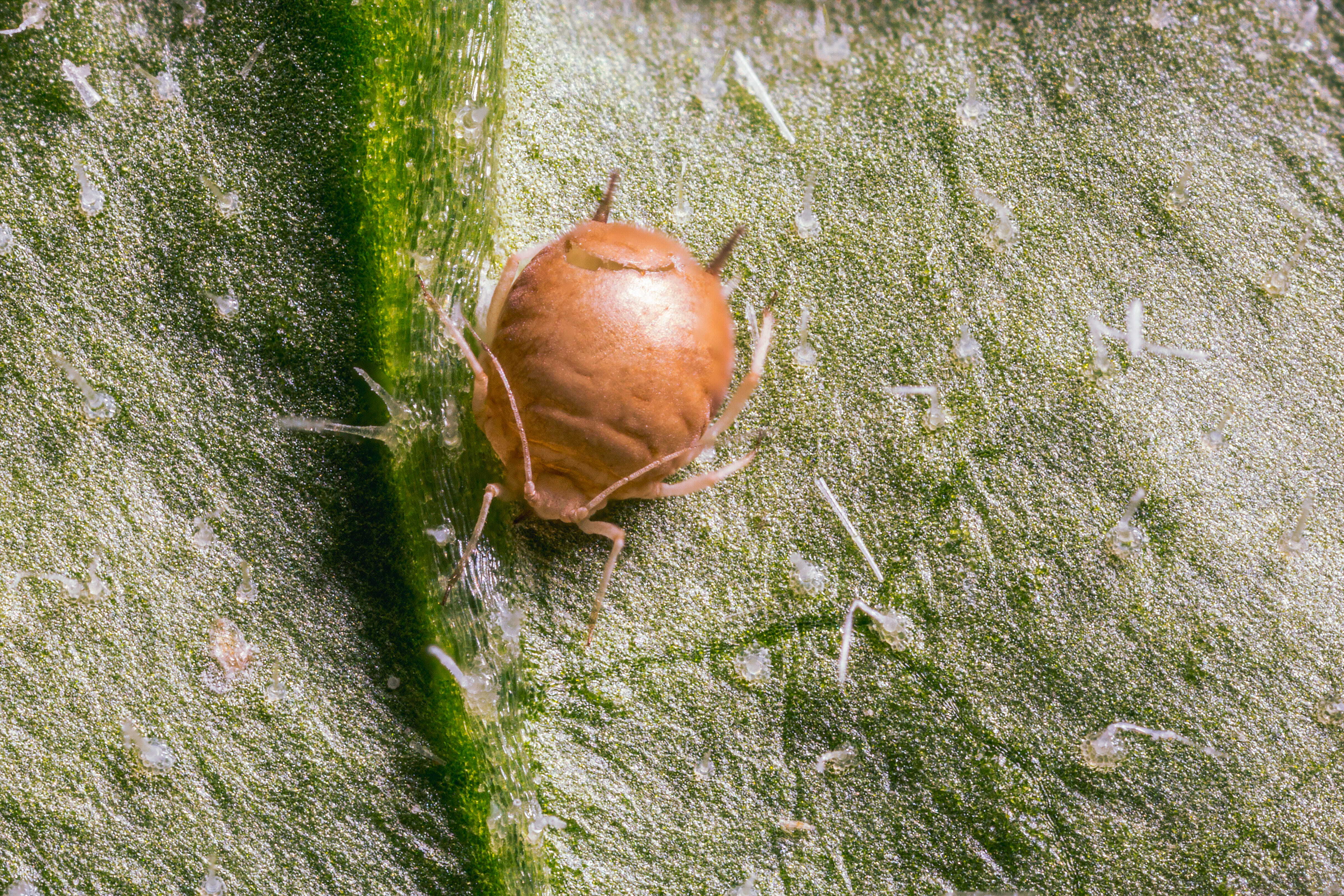
This image shows a magnified view of an aphid after parasitism, a new parasitic wasp has emerged from the aphid mummy, evidenced by the small hole at the top of the husk
Aphipar (Aphidius colemani) — Use when houses run too warm for Aphipar-M
Best Working Conditions: Most effective between 68 and 77°F. Effectivity is reduced at temperatures above 86°F.
STEP 3 — Add Aphidend for Sticky, Honeydew‑Heavy Hotspots
Aphidend (Aphidoletes aphidimyza)
Predatory midge larvae that consume aphids outright
Excellent for sticky foliage pockets and bench edges
Aphidend complements parasitoids by clearing out aphid clusters, the gall midge locates aphid colonies and deposits eggs at their location, these eggs hatch into larvae which then prey voraciously upon the cluster before dropping to the soil to pupate. Aphidend can be used without a soil medium, but application rates should be increased in respect to their inability to establish. For help with rates, reach out to our livechat in the bottom right-hand corner of the site.
The Aphid Lion (Chrysopa Larvae)
While parasitoids do the steady, long‑term work on green peach aphid, Chrysopa (Chrysoperla carnea) is a great option when you want fast knockdown in a concentrated area of aphid colonies.
Chrysopa larvae are active hunters, moving through the canopy to seek out and consume aphids directly. Because they stay effective in a variety of conditions, they’re especially useful during those periods when aphid pressure builds faster than parasitoid mummies can appear. They also shine during crop establishment or in areas where scouting keeps catching the same recurring hotspots.
In a green peach aphid program, use Chrysopa an additional control while while Aphipar‑M is establishing, or anytime you want quicker clean‑up. Chrysopa is also a fantastic choice as substitute for Aphidend for houseplant growers, vertical growers, soilless and hyrdroponic growers.
Ant management
If the greenhouse borders outdoor production, or if ants are a problem, remember: ants protect aphids. Manage perimeter ant sources to reduce reintroduction.
Recommended Biological Tools
- Aphipar‑M - Primary parasitoid for green peach aphid
- Aphipar - Warm season option
- Aphidend - Hotspot and honeydew cleanup, best when growing in-ground, in pots, or in soil
- Horiver Yellow — Winged monitoring and release‑zone targeting
- Ervipar - Only if you realize you’re dealing with larger aphid species, not GPA
- Chrysopa - Agressive Aphid predator, crawls to locate aphid, great for hotspot clean up in hydro systems and in houseplants
Not Sure It’s Actually Green Peach Aphid?
If the aphids you’re seeing look larger‑bodied (long‑legged, long‑antenna species like Macrosiphum euphorbiae or Aulacorthum solani), then Ervipar (Aphidius ervi) is the correct parasitoid — not Aphipar‑M.
Ervipar is not a primary tool for green peach aphid.
