
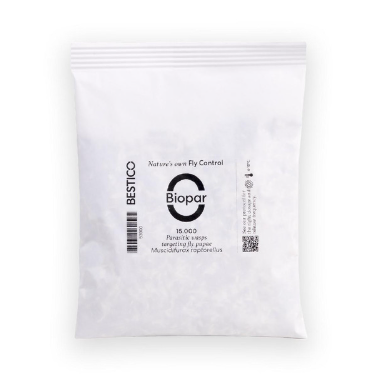
Biopar: Biological Fly Control for Barns, Stables, and Livestock Facilities
Jun 02, 2026
Fly pressure in barns and stables is not simply an annoyance. House flies (Musca domestica), stable flies (Stomoxys calcitrans), and lesser house flies (Fannia canicularis) cause measurable harm to livestock: interrupted feeding, weight loss, reduced milk production, skin irritation, and stress that compounds over the course of a summer. Chemical fly sprays reduce adult populations temporarily, but they do not address the source of the problem, which is in the manure and organic matter where fly larvae develop. Biopar works differently. It targets flies before they become adults, at the pupal stage where the next generation is developing, using parasitic wasps that are harmless to livestock, humans, and the surrounding environment.
How Biopar Controls Flies: The Biology Behind the Wasps
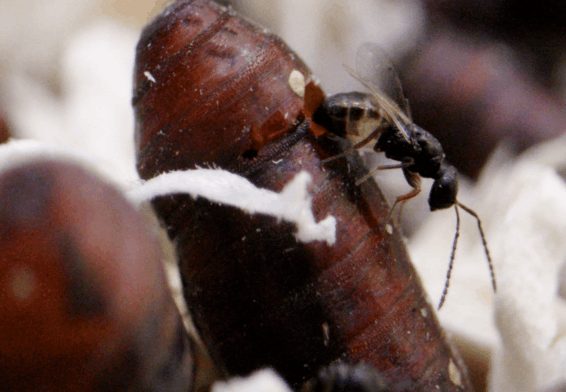
Biopar contains Muscidifurax raptorellus, a tiny parasitic wasp that is a few millimetres in length and poses no threat to people or animals. It does not sting, does not swarm, and is essentially invisible in a working stable or barn environment. What it does is locate fly pupae in manure, composting organic matter, and moist substrate near stable walls, edges, and furrows where flies prefer to pupate. The female wasp lays her eggs inside the fly pupa. Her larvae develop by feeding on the developing fly inside the pupa, preventing the adult fly from ever emerging. The new generation of wasps then emerges from the pupal shell and immediately begins searching for more fly pupae to parasitize.
The generation time from parasitism to emergence of the new wasp generation is approximately two to three weeks, depending on temperature. This means a Biopar introduction does not produce an immediate visible reduction in adult flies. The effect builds over several weeks as successive wasp generations work through the pupal population in the substrate. Starting introductions before fly season peaks, rather than waiting until adult numbers are already high, gives the program the lead time it needs to be effective.
Where and How to Apply Biopar in a Livestock Facility
Placement is the most important factor in a Biopar program. The wasps need to be near where flies pupate, which is in manure, damp straw, composted organic material, and soil beneath and around livestock housing. Distribute the material in small heaps close to these pupation sites: along stable walls, at the edges of manure piles, in furrows, and near drainage areas where organic matter accumulates. Cover each heap with five to ten centimetres of dry straw to maintain appropriate conditions for the pupae in the packaging and to protect the material from disturbance by livestock or birds.
The material must be placed on dry or relatively dry substrate. Excessively wet placement reduces effectiveness. If your manure management produces very wet conditions, focus placement on drier edges and margins rather than the saturated centre of manure piles. For facilities with heavy or ongoing manure accumulation, more frequent applications closer to the active accumulation areas will produce better results than less frequent applications placed further away from the source.
Dosage Rates for Biopar by Livestock Type
Dosage varies by animal type and size because fly pressure and manure production differ significantly across species. The rates below are indicative starting points. Actual requirements depend on facility size, manure management practices, the severity of existing fly pressure, and local climatic conditions. For tailored advice on larger or more complex operations, consultation with a specialist is recommended.
For cattle, the starting rate is 200 to 400 wasps per animal per introduction. Calves, which produce concentrated manure in smaller areas and support higher local fly pressure, require 800 to 1,000 per animal. Horses are 200 to 500 per animal. Pigs are 200 to 500 per animal. Sheep and goats, which tend to have drier manure and lower fly pressure per animal, require 400 to 800. Poultry facilities require 2 to 10 wasps per bird, with the wide range reflecting the significant variation in facility density and management across poultry operations. Biopar is available in a regular pack of 15,000 pupae and an XL format of 150,000 pupae for larger facilities.
Timing and Repetition: Why a Single Introduction Is Not Enough
Fly populations in a livestock facility are continuous. Adults are laying eggs throughout the warm season, larvae are developing in the substrate at all times, and new pupae are forming on an ongoing basis. A single Biopar introduction targets the pupae present at the time of application and the immediate subsequent generations. It does not provide lasting control on its own. Repeat introductions throughout the fly season are required to maintain pressure on the pupal population as it continuously replenishes.
Begin introductions as soon as fly activity can be expected in your region, typically in early spring as temperatures warm and before adult populations build. Continuing through summer and into early autumn, when fly pressure in livestock facilities is highest, gives the parasitic wasp population the best chance of keeping pace with the fly population. The goal is to maintain a standing wasp population working through the substrate continuously, which requires regular replenishment of the Muscidifurax raptorellus population throughout the season.
What Biopar Does Not Replace
Biopar is a biological tool that works at the pupal stage. It does not reduce the adult fly population that is already present when you start a program. For facilities with existing heavy adult fly pressure, a combination approach that addresses adults through trapping or other non-chemical methods alongside the Biopar program will produce faster visible results. Good manure management is also essential. Removing manure frequently, managing moisture levels in the substrate, and eliminating unnecessary organic accumulation near housing all reduce the number of pupation sites available to flies and make the Biopar program more effective by reducing the volume of pupae the wasps need to parasitize. Biopar works best as part of an integrated approach rather than as a standalone response to a facility with poor baseline sanitation.
Related Articles
The Beginner's Guide to Biological Pest Control - how biological control works and what to expect from a program. Parasitoid Wasps: The Real-World Influence Behind the Alien Predators - the biology of parasitic wasps and how they work as control agents. What Is Prevention - the case for getting biologicals in place before pressure builds.
