
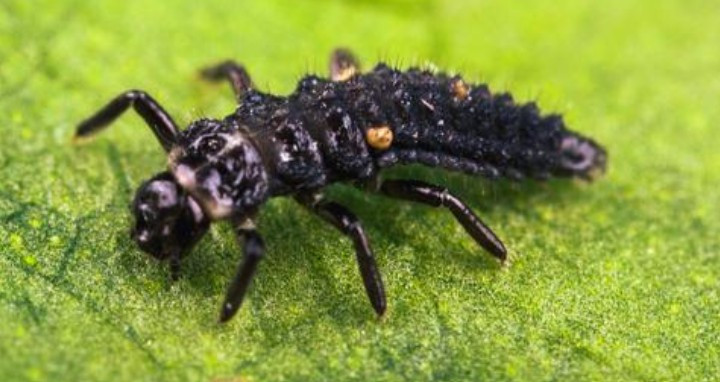
Aphidalia (Adalia bipunctata) — Targeted Aphid Control with Ladybug Larvae
Feb 06, 2026
Aphidalia contains larvae of Adalia bipunctata, the two-spotted ladybird, a specialist predator for fast, targeted suppression of aphids. Larvae are the most voracious life stage, consuming aphids entirely and delivering immediate curative action in hotspots. After feeding, larvae pupate and develop into adults, which lay eggs for sustained control. Aphidalia is chemical-free and safe for use in any growing environment including greenhouses, nurseries, orchards, flower beds, interiorscapes, outdoor landscapes, indoor plants including houseplants and more.
Get Started: Aphidalia – Lady Beetle for Aphid Control
Immediate impact: Larvae begin feeding on aphids immediately after release
Lifecycle control: Pupation leads to adults that reproduce for extended suppression
Versatile application: Effective across indoor and outdoor environments
Aphidalia Targets
All aphid species and life stages
*Particularly effective on dense colonies in trees, ornamentals, and greenhouse crops
For greenhouse, hoop houses and other programs, consider Aphipar (Aphidius colemani) or Aphipar-M (Aphidius matricariae) for more comprehensive control.
When to Use Aphidalia
Use wherever aphid pressure is present or expected. Effective across all growing environments.
Recommended for:
First signs of aphid colonies on trees or ornamentals
Preventative coverage in high-risk environments
Targeted suppression in hotspots with visible aphid pressure
Growers seeking natural, residue-free aphid control
How It Works
Mode of Action: Larvae feed directly on aphids, consuming them entirely.
Behavior: Larvae actively search for aphid colonies and feed continuously until pupation.
Visual Effect: Aphid populations decline rapidly as larvae feed.
*Larvae are the most aggressive feeding stage, making them ideal for curative action. Adults may emerge later to sustain control.
Feeding Rates
Larvae consume 30–50 aphids per day under optimal conditions.
Feeding continues for 2–3 weeks until pupation.
Why this matters: High feeding capacity ensures rapid suppression of aphid hotspots.
Lifecycle of Adalia bipunctata
Larval Stage (Shipped Stage)
Actively hunts aphids; lasts 2–3 weeks
Pupal Stage
Non-feeding; lasts 5–7 days
Adult Stage
Lifespan ~2 months; capable of laying hundreds of eggs under optimal conditions
Explanation: Adults reproduce, creating new larvae for extended control if prey remains available.
Release Rates & Placement
| Pressure Level | Rate per Tree | Repeat Interval |
|---|---|---|
| Light Pressure | 1 bag | Weekly |
| Heavy Pressure | 2–3 bags | Weekly |
Placement Tips:
Open the cotton bag and attach it to the tree near the first branch using a nail or wire stitch.
Apply 1 bag per 25 cm stem diameter, maximum 3 bags per tree.
Start introductions as soon as aphids are detected.
Best Working Conditions
Temperature: Active from 59°F to 86°F; optimal range 68–77°F
Humidity: Moderate to high
Compatibility Guidance
Compatible with other beneficials
Avoid broad-spectrum insecticides; check chemical compatibility via our Beneficial Insect & Pesticide Compatibility page.
Product Specifications
Species: Adalia bipunctata
Pack Size: Cotton bag with larvae
Carrier: Cotton substrate
Appearance: Larvae are black with orange markings; pupae form later in situ
What to Expect
Larvae begin feeding immediately after release
Aphid colonies decline within days; adults emerge later for extended control
Reapply based on scouting observations to maintain control and prevent resurgence
Recommended IPM Pairings
Aphipar or Aphipar-M for greenhouse aphid control
Swirskii for thrips and mite control
Spical or Spidex for spider mite control
