
Bringing Houseplants Indoors? What to Watch For
Oct 05, 2026
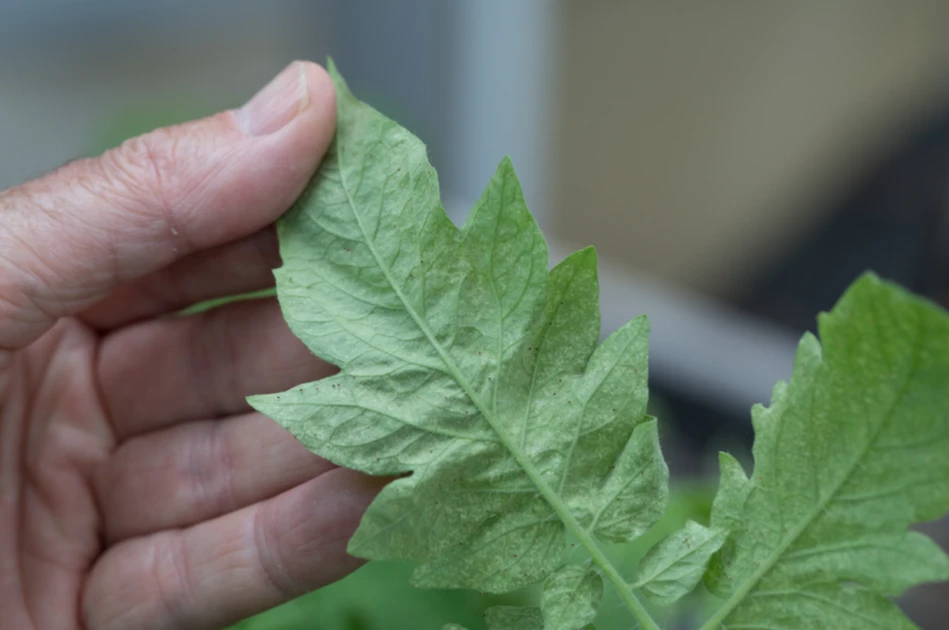
Spider mites, aphids, mealybugs and scale, whitefly, and thrips can ride in on the foliage when you are bringing houseplants indoors after a summer outside, and fungus gnats can ride in with the potting mix. They are easy to miss on moving day. Eggs sit along the leaf veins, juveniles are too small to see without a hand lens, and fungus gnat larvae live below the soil surface. A plant can look healthy on the patio and still be carrying any of them.
That matters because the plants coming in will sit beside plants that stayed inside all summer. A single returning pot can introduce spider mites or mealybugs to a shelf of plants that did not have them. The routine in this article works from a simple assumption: treat each returning plant as if it may be carrying something, give it time to show you what, and match your response to what appears.
Why Problems Can Appear Weeks After Bringing Houseplants Indoors
A plant can carry a small number of spider mites or aphids through the summer without showing it, because several things outdoors work against them. Rain washes the leaves. Wind dislodges soft bodied insects from tender new growth. Wild predators such as lacewings, lady beetles, and predatory mites feed on them. With those pressures in place, a small population can stay small enough that you do not see it.
Inside your home, those pressures are removed together. The air is still, the temperature holds steady, and no wild predators are feeding on the mites or aphids that made the trip. The population now has room to grow, which is how a plant that looked healthy in October can show fine webbing, sticky leaves, or cottony white clusters in November. In that case the plant did not pick up something new in your living room. It arrived with a population too small to see, and the move indoors took away the conditions that had been holding it down.
This is why a careful look on moving day is a good start and not a complete plan. You are searching for what is visible now, and you are also waiting to see what a hidden population becomes after a few weeks of comfortable conditions.
Inspecting and Isolating Plants Before They Rejoin Your Collection
Start with a rinse before a plant comes through the door. Plain water over the tops and undersides of the leaves washes off insects and mites sitting on the surface, and it gives you a reason to handle each leaf. While you are there, look at the places small organisms shelter: the undersides of leaves, the joints where a leaf meets the stem, the newest and softest growth, and any bumps along the stems that do not rub off. Then check the soil surface, the rim of the pot, and the drainage holes.
After that, keep the summer plants apart from your indoor collection for three to four weeks. A spare room, a bathroom with a window, or the far side of the house will do. Problems that came in with a plant can take that long to show, and isolation keeps whatever appears confined to one group of plants while you deal with it. Go over each plant once a week with a hand lens, and hang yellow Horiver sticky traps nearby to catch flying adults such as fungus gnats, whitefly, and winged aphids. For a step by step method, see how to scout in houseplants.
Curative Control: Bottle Applications for Active Problems
When something shows up during isolation, start with the difference between formats. Bottle applications are curative and sachets are preventative. A bottle puts a large number of beneficials on the plant at once, and they begin feeding right away, which is what a visible problem calls for. A sachet ramps up gradually, which suits prevention and is too slow on its own for a plant that already has webbing on it.
From there, the choice follows what you found. Webbing and stippled leaves point to spider mites, and Spidex is a spider mite specialist. It contains Phytoseiulus persimilis, a predatory mite whose prey is spider mites. Silvery streaks from thrips, or small white insects that lift off the leaves when you brush them, call for Swirski-Mite. It contains Amblyseius swirskii, a predatory mite that feeds on young thrips larvae and on whitefly eggs and larvae.
Confirm aphids by looking at the insects themselves, since aphid species are not limited to particular host plants. For an open collection, Chrysopa is the practical choice. It contains green lacewing larvae, which crawl instead of fly and feed on aphid colonies, and they also feed on mealybugs, thrips larvae, and spider mites they come across. If the affected plants live inside a glass cabinet or a grow tent, Aphipar-M parasitic wasps can be added there, applied weekly or every other week for two to four weeks. Flying beneficials are suited to enclosed setups like those and not to open living spaces.
For mealybugs, Cryptobug-L contains larvae of the mealybug destroyer beetle. They feed on mealybug eggs, crawlers, and adults, and they also control soft scale where they encounter it.
Fungus gnats are handled in the soil. Entonem contains beneficial nematodes that target the larvae in the potting mix, not the adults flying around the pot. You will keep seeing adults while the existing ones are alive and laying eggs, and new larvae keep hatching from those eggs, so one drench does not resolve the problem. Keep the mix moist and apply weekly for at least two to three weeks. Entomite contains soil dwelling predatory mites that feed on fungus gnat larvae, and it can be applied alongside the drenches.
After a bottle application, expect pressure to begin declining within a week to a week and a half. If it has not dropped by then, repeat the application before the two week mark. Depending on severity, weekly or every other week applications for two weeks to a month may be required before the plant is ready to leave isolation.
Preventative Sachets After Bringing Houseplants Indoors
Once a plant has completed isolation and pressure is minimal, it can rejoin the collection, and your approach shifts from cure to prevention. This is where sachets fit. Mites emerge from a sachet gradually over a period of weeks, which is a good match for protecting plants through the months when your home is closed up and your plants sit close together. Sachets can also be hung alongside a bottle application during an active problem, so prevention is already in place as pressure comes down.
Ulti-Mite Sachets are the default for houseplants because of how they hold up in a home. Standard paper sachets can dry out in the low humidity of a heated house, and in a humid cabinet they can become wet and fail. Ulti-Mite Sachets are made with a compostable film that tolerates both dry and humid conditions, and each sachet provides four to six weeks of predatory mites. Swirski-Mite Ulti-Mite Sachets are the choice for thrips and whitefly, and Spical Ulti-Mite Sachets are the choice for spider mites. Replace them on that four to six week schedule.
Aphids, mealybugs, and fungus gnats have no sachet option. The maintenance path for those is a spaced out bottle or drench application on a regular schedule once pressure is minimal.
Keep the weekly hand lens check going after isolation ends. It is how you find a problem while it is still small, and when you do find one, the houseplant collection page lists the beneficials matched to it.
Related Articles
Using Sachets on Houseplants
Beneficial Insects for Houseplants
Thrips on Houseplants: Identification, Damage, and Natural Control
