
Russet Mites
The hemp russet mite (Aculops cannabicola) is a member of the Eriophyoid mite family, and has emerged as a devastating pest in cannabis cultivation. The eriophyoids mite are unique among the acari: they have worm-like bodies (known as fusiform) and larvae and adults have 4 legs, not 8 like other mites. Eriophyoid mites are also microscopic; too small to be seen with the naked eye.
-
 Swirski-Mite Ulti-Mite Sachets
Swirski-Mite Ulti-Mite Sachets (Amblyseius swirskii) — Predatory Mite for Thrips, Whiteflies &…
Use For Thrips, White Fly, Broad and Russet Mites, Two-Spotted Spider Mites, Flat MitesSpecies A. swirskii$35.99 -
 Spical Ulti-Mite Sachets
Spical Ulti-Mite Sachets (Neoseiulus californicus) — Predatory Mite for Spider Mite ControlSpi…
Use For Two-Spotted Spider Mites, Thrips, White Fly, Broad and Russet Mites, Flat MitesSpecies N. californicus$35.99 -
 Spical PLUS Sachets
Spical PLUS Sachets (Neoseiulus californicus) — Predatory Mite for Spider Mite ControlSpical P…
Use For Two-Spotted Spider Mites, Thrips, White Fly, Broad and Russet Mites, Flat MitesSpecies A. californicus$84.36 -
 Swirski-Mite
Swirski-Mite (Amblyseius swirskii) — Predatory Mite for Thrips, Whiteflies & Pest MitesSwi…
Use For Thrips, White Fly, Broad and Russet Mites, Two-Spotted Spider Mites, Flat MitesSpecies A. swirskii$155.22 -
 Swirski-Mite PLUS Sachets
Swirskii-Mite PLUS Sachets (Amblyseius swirskii) — Predatory Mite for Thrips, Whiteflies &…
Use For Thrips, White Fly, Broad and Russet Mites, Two-Spotted Spider Mites, Flat MitesSpecies A. swirskii$84.36 -
 Thripex
Thripex Bottles (Neoseiulus cucumeris) — Predatory Mite for Thrips and Mite ControlThripex bot…
Use For ThripsSpecies N. cucumeris$33.75 -
 Spical
Spical Bottles (Neoseiulus californicus) — Predatory Mite for Spider Mite Control Spical bottl…
Use For Two-Spotted Spider Mites, White Fly, Broad and Russet Mites, Flat MitesSpecies A. californicus$148.47 -
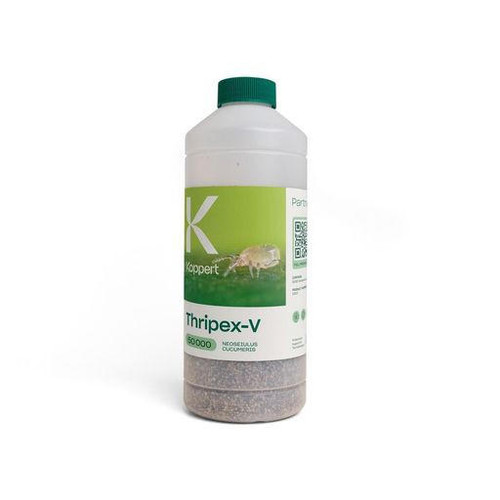 Thripex-V
Thripex-V Bottles (Neoseiulus cucumeris) — Predatory Mite for Thrips and Mite ControlThripex-V…
Use For Thrips, Mite Spp.Species N. cucumeris$40.49 -
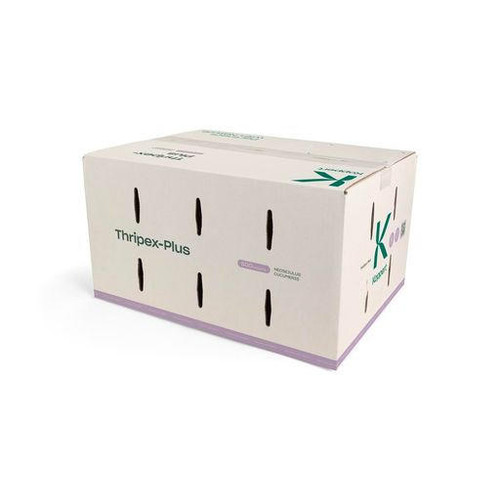 Thripex PLUS
Thripex Plus Sachets (Neoseiulus cucumeris) — Predatory Mite for Thrips and Mite ControlThripe…
Use For ThripsSpecies N. cucumeris$146.22 -
 Isarid Mycoinsectide
General information When to use Isarid? Isarid™ works best in a pest management program de…
Use For whiteflies, aphids, thrips, psyllids, mealybugs, leaf hoppers, plant bugs*, weevils*, grasshoppers*, Mormon crickets, locust, beetles, mites, bagrada bugs, lygus bugs, and fungus gnats*. *Not Registered for Use By California$231.70 -
 Thripex-Mini (w/stake)
Thripex-Mini Sachets with Sticks (Neoseiulus cucumeris) — Predatory Mite for Thrips and Mite C…
Use For Thrips, Mite Spp.Species N. cucumeris$123.72 -
 Anso-Mite
Anso-Mite (Amblyseius andersoni) — Cold-Tolerant Predatory Mite for Thrips, Spider Mites &…
Use For Thrips, two-spotted spider mites, broad mites, russet mitesSpecies A. andersoni$337.43
More Information about Russet Mites
[↑ Back to Top]Little is known about many members of the eriophyoid mite family, and the hemp russet mite is no exception. This mite was first identified and described on hemp in Hungary by HK Farkas, in 1960. Further morphological elaboration of hemp russet mites discovered in Serbia was provided by Petanović et al, in 2007. Nothing else has been published.
At the time of this writing, no applied research has been performed on the hemp russet mite. We do not know the specifics of its life cycle, optimum environmental conditions, how they overwinter, if its host range extends beyond cannabis, etc.. Furthermore, we feel borrowing critical details of the hemp russet mites cousin from its cousin, the tomato russet mite (Aculops lycopersici) is inappropriate. There are over 200 species in the genus Aculops; the fact that these mites share the same genus proves only that they look similar.
We can, however, gain a rather accurate portrait of this pest by comparing years of observations in the field with what we know to be true about other eriophyoid pests.
What to look for:
Hemp russet mites cause leaf yellowing (russeting), leaf margin curling, brown pistils, ‘sawdust’ on stems
Hemp Russet Mite Life cycle
The life history of the hemp russet mite remains unknown at this time.
Biology
- The hemp russet mite feeds on the epidermal cells of leaves, not the vascular system.
- With only 4 legs, hemp russet mites do not travel very efficiently, on their own.
- Transported on clothing or with the help of the wind, they spread easily and infest nearby plant material rapidly.
- For mites that are blown onto the plant by the wind, it may seem as it the infestation started in the middle of the plant. In fact, the mites arrive weeks prior, slowly building up numbers as the plants grow larger.
- They have a strong vertical migration habit, slowly working their way up the plant.
- Once at the top, the hemp russet mites form ‘chains’ on top of one another, seeking to be blown in the wind.
- When observing an infestation, it is important to understand that the hemp russet mite population typically extends beyond the areas where damage is visible. There is normally a large number of mites in the areas directly above the visible damage.
- Similar to the tomato russet mite, the hemp russet mite will seek shelter from predators behind glandular trichomes.
- Moisture stress may exacerbate the damage caused by the hemp russet mite.
I see hemp russet mites, now what?
By the time symptoms are visible, hemp russet mite populations may be in the thousands, or more; early detection is critical. Magnification is required to see these mites; 90x is sufficient. A stereo microscope, or high-quality USB digital microscope, should be used for best results. Hemp russet mites may start low on the plant, or may already be on the upper leaves; a wide variety of samples from different parts of the plant may be necessary. To reiterate: it is vitally important to detect the presence of hemp russet mites as early as possible, which is why regular and meticulous scouting is crucial in using biocontrols successfully to defend against these pests. Once identified, there are a number of species of predatory mites that have been documented to feed on them, including Andersoni, Swirskii, Californicus, and Cucumeris. However, to combat active infestations, it is best to use the liter containers of active adults and apply them in successive weeks until the issue is under control.
I don't see any hemp russet mites, but I'd like to prevent problems...
For preventative treatments, introducing predatory mites in sachets has resulted in the best outcomes. The sachets can be used from the beginning of the veg cycle, all the way through the midway point of the flower cycle, when the forming trichomes tend to deter and inhibit the mobility of the predatory mites. The sachets are designed to slowly release the predators, as they reproduce inside the sachet, over the course of 3-5 weeks, depending on the environmental conditions of your facility or farm.
