


Anso-Mite Plus
Write a Review

Anso-Mite Plus
Anso-Mite Plus (Amblyseius andersoni) — Cold-Tolerant Predatory Mite Sachets
Anso-Mite Plus sachets contain Amblyseius andersoni, a cold-tolerant predatory mite for controlling thrips, non-webbing spider mites, rust mites, and whitefly eggs and larvae. These sachets provide slow-release, preventative coverage and early-season protection in cooler environments where other predatory mites may be less effective. Anso-Mite Plus is best used preventatively to stop pest populations before they establish. Anso-Mite is chemical-free and safe for use in any growing environment including greenhouses, nurseries, orchards, flower beds, interiorscapes, outdoor landscapes, indoor plants including houseplants and more.
Anso-Mite Targets:
Young larvae of various thrips species
Eggs and larvae of whitefly
All stages of non-webbing spider mites (e.g., European red mite Panonychus ulmi)
Tomato russet mites (Aculops lycopersici) aka "Rust mites"
How It Works
Mode of Action: Predatory mites pierce prey with sucking mouthparts and extract internal contents.
Behavior: Mites are typically found on lower leaf surfaces near vein junctions.
Visual Effect: Prey is consumed entirely—only the skin remains.
Feeding Rates
Nymphs and adults feed on thrips larvae, whitefly eggs and larvae, rust mites, and non-webbing spider mites.
Under optimal conditions, adults consume ~5–10 pest eggs or larvae per day.
Feeding life stages last approximately 20 days.
Placement Tips:
Hang sachets in shaded spots, away from direct sun or irrigation.
Hold by hook or clip to avoid damage.
Do not open sachets—exit hole is pre-made.
Repeat releases based on scouting observations.
Best Working Conditions
Temperature: Effective above 57°F; optimal range 68–82°F.
Humidity: Sensitive to RH below 65%.
Compatibility Guidance
Do not combine with other generalist predatory mites such as A. swirskii, A. limonicus, T. montdorensis, or N. cucumeris.
Allow residues from oils or soaps to dry before application.
Check out our compatibility page before combining with chemical sprays.
Product Specifications
Species: Amblyseius andersoni
Pack Size: 250 sachets
Mite Count: Multiple life stages (emerge gradually)
Carrier: Bran
Presentation: Slow-release sachets with hooks
Appearance: White sachets with exit hole; mites are beige and fast-moving
What to Expect
Mites begin emerging within 2–3 days of placement.
Pest populations are controlled as mites consume larvae and eggs.
Results build steadily and persist as mites survive on pollen or alternative prey.
Reapply based on scouting observations to maintain control and prevent resurgence.
Recommended IPM Pairings
Spidex for spider mite control
Horiver Yellow sticky traps for monitoring flying pest movement.
Long-term storage, i.e. more than 48 hours, is not recommended. Apply promptly after receipt. Our products are shipped fresh for immediate use to ensure maximum performance. If needed, keep in a cool, dark, dry place for up to 1–2 days; longer holding reduces effectiveness and quality.
Yes - sachets contain a mix of life stages, including adults, nymphs, and eggs.
Do not combine with other generalist mites like A. swirskii, A. limonicus, T. montdorensis, or N. cucumeris. However, anso-mite can be paired with all of our other solutions.
Sachets are designed for prevention and steady maintenance. You can also use them alongside bottles when you need ongoing control during an active issue. Once the sachet is placed, predatory mites begin feeding right away, and their numbers increase over the next 4–6 weeks as new generations emerge from the sachet. With new generations developing steadily over time, sachets deliver consistent preventative coverage across the area.
Other Products Growers Love

Entonem (OMRI) — Steinernema feltiae - Nematodes for Soil and Foliar Pest Control Entonem contains t…

Thripor (Orius insidiosus) — Predatory Bug for Thrips ControlThripor contains Orius insidiosus, a pr…
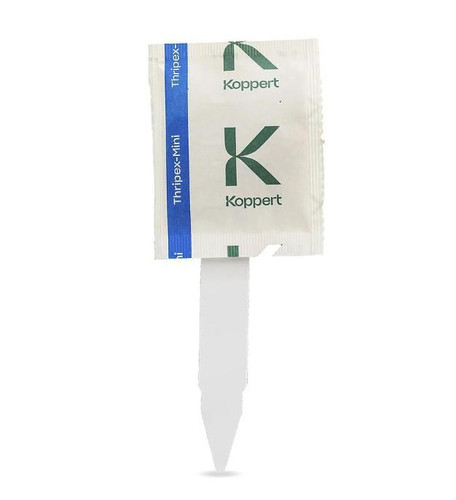
Thripex-Mini Sachets with Sticks (Neoseiulus cucumeris) — Predatory Mite for Thrips and Mite Control…

General information When to use Isarid? Isarid™ works best in a pest management program designed…

Limonica (Amblydromalus limonicus) — Predatory Mite for Thrips & WhitefliesLimonica bottles contain …
