
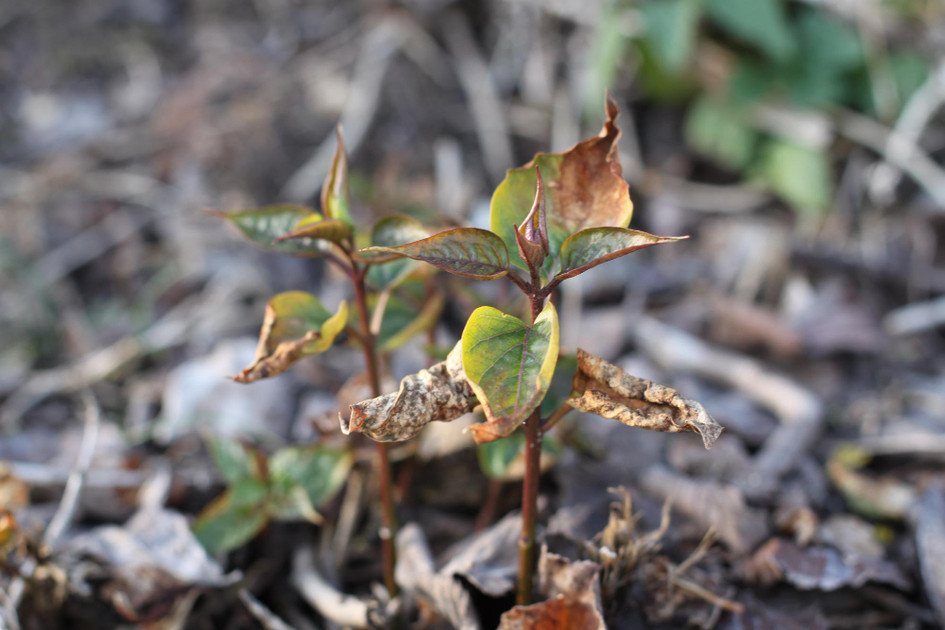
How to Diagnose Foliage Damage
Dec 10, 2025
Accurate foliage diagnosis remains one of the most important—and most difficult—skills a professional grower can master. Many biological, nutritional, and environmental factors can produce symptoms that look deceptively similar. Stippling, bronzing, leaf curl, silvering, chlorosis, and wilting can be caused by pests, pathogens, cultural issues or stress. Misdiagnosis leads to unnecessary treatments, delayed intervention, and preventable crop loss. This guide provides a comprehensive, pattern-based approach to interpreting foliage symptoms so growers can identify the true cause and respond quickly and accurately.
1. Understanding Stippling, Speckling and Pin-Dot Patterns
Stippling is one of the hallmark signs of spider mite feeding. Two-spotted spider mites puncture individual leaf cells using stylet-like mouthparts, removing chlorophyll and creating pale speckles that expand as feeding continues (Oregon State University Extension, 2021). Under warm, dry conditions, this stippling rapidly intensifies because spider mites reproduce faster in low humidity and high heat (Oregon State University Extension, 2021). Because mites primarily feed on the undersides of leaves, early infestations are easy to overlook, and visible damage often only appears once populations have already built significantly (UC IPM, 2021). Thrips also cause pale markings, but instead of uniform dots, they create elongated silver streaks by rupturing epidermal cells, leaving air-filled spaces that reflect light (UC IPM Thrips, 2021). Nutrient problems rarely mimic true stippling. Deficiencies generally create smooth, even discoloration across the leaf or crop block, not clustered, rapid-onset speckling.
To confirm mite damage, turn the leaf over and check the underside with a hand lens. Look for tiny round eggs, shed skins, and fine webbing near the veins—these are clear signs of spider mites (Oregon State University Extension, 2021; UC IPM, 2021). Thrips damage looks different when you tilt the leaf toward the light; their scars shine silver and often have small black specks of feces nearby (UC IPM Thrips, 2021). A simple tap test helps too: hold a white card under the leaf and tap it. If you see tiny moving dots that smear green when crushed, you’re dealing with mites. Slender, fast-moving insects with fringed wings point to thrips (UC IPM, 2021).
2. Recognizing Bronzing, Silvering, and Color Shifts in Leaf Tissue
Thrips feeding produces a distinctive silvery or bronze cast, caused by collapsed cells that no longer reflect light correctly (UC IPM Thrips, 2021). Bronzing often appears alongside black fecal droplets and distorted new growth. Russet mites produce a dusty or dull bronzing that begins on stems before spreading to leaves (Texas A&M IPM, 2020). Broad mites cause new growth to become thickened, hardened, and misshapen. These symptoms often resemble herbicide drift or viral infection. Environmental pressures can mimic pests; for example, high light intensity or excessive heat can bleach or bronze upper leaves. However, environmental bronzing is usually uniform across an area, whereas pest bronzing is patchy and progressive.
To separate pest damage from stress, look closely at the edges of the affected area. Thrips scars have rough, uneven borders and often include black specks of waste, while heat or light stress creates smooth, even margins (UC IPM Thrips, 2021). If you suspect russet mites, check the growing tips and leaf joints with a strong hand lens. These mites are almost invisible to the naked eye but cluster in hidden spots before symptoms spread (Texas A&M IPM, 2020). Environmental bronzing usually appears on all plants in the same light zone, while pest bronzing shows up in scattered patches and spreads irregularly (UC IPM, 2021).
3. Diagnosing Leaf Curling, Distortion, and Abnormal Growth
Leaf distortion is strongly associated with pests that target growing points. Broad mites, cyclamen mites, and thrips feeding inside buds can cause new leaves to twist, cup, thicken, or stop growing (University of Maryland Extension, 2020). Under mite pressure, the distorted leaves often feel rigid or leathery. Aphid-induced curling tends to be softer and more flexible and is frequently accompanied by visible colonies or sticky honeydew. Environmental curling generally does not halt growth. If new leaves continue to expand normally, cultural stress is more likely. If new growth curls and stalls, mites should be strongly suspected.
To confirm broad mites, remove a distorted bud and check under magnification for eggs with tiny white dots on their surface—a unique feature of this pest (University of Maryland Extension, 2020). Feel the affected leaves; stiff, hardened tissue points to mites, while soft curling with active growth suggests aphids. If only the newest leaves are affected, suspect mites or thrips. If older leaves also show distortion, review recent chemical sprays or heat stress, which can mimic pest injury (UC IPM, 2021).
4. Interpreting Honeydew, Sooty Mold, and Sticky Residue
Sticky residue on foliage is a reliable indicator of sap-feeding insects such as aphids, mealybugs, whiteflies, or scale. These pests excrete excess sugars (honeydew), which then support the development of black sooty molds (RHS, 2020). Honeydew often appears before growers spot the pests themselves, as colonies tend to hide beneath leaves or in tight spaces. Aphids congregate on new growth, whiteflies scatter beneath leaves and fly when disturbed, mealybugs cluster in cottony masses, and scale appear as fixed bumps. If honeydew is present but insects are not immediately visible, psyllids or leafhoppers may be involved.
To confirm honeydew, wipe the leaf with a gloved finger. If it feels sticky and the residue returns after watering, it’s honeydew, not fertilizer residue (RHS, 2020). Check leaf joints and undersides where pests hide. Whiteflies will flush out when disturbed, while mealybugs and scale stay put. Ant activity is another clue—ants often protect honeydew-producing pests and lead you straight to hidden colonies (UC IPM, 2021).
5. Distinguishing Pest-Induced Chlorosis From Nutrient or Environmental Stress
Spider mites cause chlorosis that begins as stippling and progresses to generalized yellowing or bronzing under sustained feeding (Oregon State University Extension, 2021). Whitefly feeding causes diffuse chlorosis that looks slightly mottled and usually appears before heavy honeydew accumulation. Nutrient deficiencies follow consistent and recognizable patterns—magnesium deficiencies appear as interveinal yellowing, nitrogen deficiency progresses from lower leaves upward, and potassium deficiency produces marginal yellowing. Pest-induced chlorosis is inconsistent and irregular. Block-wide yellowing, especially when associated with over-watering or substrate issues, is more likely environmental than pest-driven.
Look at which leaves are affected first. Nutrient problems follow predictable patterns: iron hits new leaves, nitrogen hits old ones. Pest damage ignores these rules and shows up in random clusters (UC IPM, 2021). Compare multiple species in the same area. If all show similar yellowing, it’s likely a nutrient or water issue. If only certain crops are affected, pests are more likely. Sticky-card data and airflow notes can confirm this—whitefly hotspots often match chlorosis patches (UC IPM, 2021).
6. Recognizing Necrotic Spots, Tissue Collapse, and Dead Patches
Necrotic lesions on new growth may indicate thrips, broad mites, or russet mites. Sustained mite feeding can kill cells over time, leading to patchy necrosis (Oregon State University Extension, 2021). Leafminer damage is unmistakable; larvae leave serpentine tunnels that brown and collapse as tissue dies. Uniform necrosis across older leaves typically points toward heat, drought stress, fertility imbalance, or root dysfunction.
To confirm pest-related necrosis, hold the leaf up to the light. Leafminer tunnels appear as winding, pale tracks with dark frass lines inside, while chemical burn or heat stress shows solid, even patches without tunnels (UC IPM, 2021). Thrips damage often includes tiny black specks of waste at the edge of dead tissue, which helps separate it from spray injury that leaves clean margins (UC IPM Thrips, 2021). If necrosis starts at leaf edges and moves inward during hot weather, check for mites or thrips at the margins before assuming heat stress (Oregon State University Extension, 2021).
7. Wilting, Drooping, and Sudden Collapse — When to Inspect Roots
When a plant wilts despite moist media, the cause is often in the root zone. Root aphids and fungus gnat larvae can degrade root systems to the point that plants collapse even when adequately irrigated. In contrast, overwatering, Pythium, or EC stress tend to affect whole benches uniformly. If collapse is sporadic and irregular, root pests deserve priority inspection.
Lift the root ball and look closely at the fine roots. Fungus gnat feeding leaves ragged, chewed tips and sometimes a slimy layer on the surface, while root aphids leave sticky honeydew and white, waxy deposits near the crown (UC IPM, 2021). A quick water test can help: place a small root section in a clear container of water and watch for tiny aphids floating up from crevices. If wilting appears in random pockets rather than across an entire bench, suspect pests rather than cultural stress (Oregon State University Extension, 2021).
8. Distinguishing Environmental Damage From Biological Damage
Environmental issues often leave uniform patterns—scorched tops under intense light, crisped edges under low humidity, or bleaching under heat stress. Pest damage is seldom uniform; it clusters in hotspots and spreads in irregular patterns. If distortion, stippling, or honeydew are present, even in an environmentally stressful zone, pests should be considered first.
Start by mapping the damage. If every plant near a heater or under a bright light shows the same symptoms, it’s likely environmental. Pest injury looks patchy and often appears in shaded or protected spots where insects hide (UC IPM, 2021). Check leaf undersides for mites or thrips and look for sticky residue. Even a few signs of pests tip the diagnosis toward biological causes, especially if sticky cards nearby show insect captures (UC IPM Thrips, 2021).
9. A Practical Diagnostic Workflow for Professional Growers
Growers can diagnose most foliage issues rapidly by following a consistent process. Begin with new growth, where mites and thrips show their earliest signs. Then inspect leaf undersides for pests, residue, or feeding scars. Evaluate how symptoms are distributed across the block: clustered damage suggests pests; uniform damage suggests nutrition, irrigation, or climate. Feel the texture of leaves—sandpapery foliage suggests mites, while leathery new growth is typical of broad mites. Review environmental data and cross-check sticky-card captures. If wilting persists despite moist media, examine the roots. This systematic approach greatly improves diagnostic accuracy.
To make this process reliable, sample plants from different zones, including edges and corners where problems often start. Record leaf age, canopy position, and symptom shape because these details often reveal the cause (UC IPM, 2021). Compare your observations with sticky-card data. If insect counts rise before symptoms appear, increase scouting in nearby areas to prevent outbreaks (Oregon State University Extension, 2021).
10. Biological Control Implications for Each Damage Pattern
Thrips-related silvering and bronzing respond effectively to predators such as Amblyseius swirskii, Amblyseius cucumeris, and Orius insidiosus (UC IPM Thrips, 2021). Spider mite stippling and bronzing can be managed using Phytoseiulus persimilis or Neoseiulus californicus (Oregon State University Extension, 2021). Honeydew-producing pests benefit from early intervention with parasitoids or predators such as Aphidius spp., Aphidoletes aphidimyza, Cryptolaemus montrouzieri, and Encarsia or Eretmocerus for whiteflies (RHS, 2020). Root pest symptoms may call for biological nematodes or predatory soil mites, depending on the crop and production system.
Match the control agent to the pest and its location. Thrips damage on young leaves and buds calls for predators that work in tight spaces, while widespread whitefly chlorosis and honeydew favor parasitoids that target pupae (UC IPM Thrips, 2021; RHS, 2020). For spider mites, heavy webbing and rapid bronzing justify Phytoseiulus persimilis, while scattered infestations under dry conditions favor Neoseiulus californicus, which tolerates lower humidity (Oregon State University Extension, 2021). Confirm pest identity before releasing agents to avoid wasting time and resources.
11. When to Escalate to Microscopic or Advanced Diagnostics
Some pests, like russet mites, are too small to see without magnification. If you’ve checked with a hand lens and still can’t find the cause of distorted growth, bronzing, or unusual yellowing, it’s time to take a closer look. Persistent symptoms that don’t match common patterns—such as curling combined with bronzing or uneven chlorosis—often require more detailed inspection.
If you’re unsure, don’t guess. Use our Live Chat or Consultation Form to connect with an expert. We can help you confirm whether the issue is pest-related, environmental, or nutritional, and guide you through the most effective diagnostic steps. Our team can also recommend the right monitoring tools and magnification techniques so you can identify hidden pests confidently.
12. Summary: Diagnose with Confidence and Get Expert Support
Accurate diagnosis starts with a systematic approach: check new growth first, inspect leaf undersides, compare symptom patterns across the crop, and review environmental conditions. Combine these observations with sticky-card data for a complete picture. When symptoms don’t fit the usual patterns or you need a second opinion, we’re here to help.
Reach out through Live Chat or submit a Consultation Form for personalized guidance. Our experts can walk you through a step-by-step diagnostic process and recommend biological solutions tailored to your crop and conditions. With the right support, you’ll make faster, more confident decisions and keep your plants healthy.
References
Oregon State University Extension. “How to recognize and manage spider mites in the home garden.” 2021.
UC Statewide Integrated Pest Management Program (UC IPM). “Spider mites: Home and Landscape.” 2021.
UC Statewide Integrated Pest Management Program (UC IPM). “Thrips: Floriculture and Ornamental Nurseries.” 2021.
Texas A&M AgriLife Extension IPM. “Diagnosing Insect and Mite Damage on Ornamentals.” 2020.
Royal Horticultural Society (RHS). “Houseplant pests: sap-feeding insects.” 2020.
University of Maryland Extension. “Mites in Home Gardens.” 2020.
Related Articles
How to Solve Spider Mites in Houseplants
Cryptobug (Cryptolaemus montrouzieri) — Mealybug Destroyer Adults - Natural Enemies
