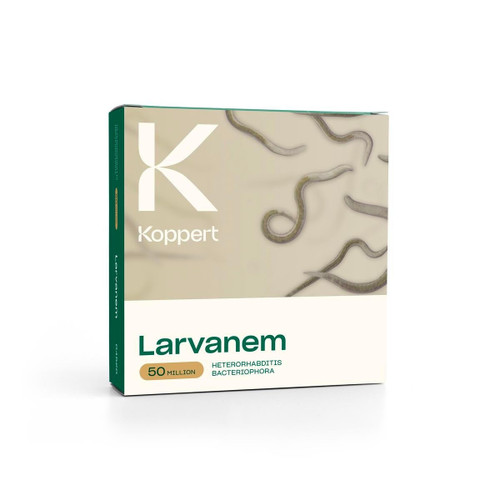
Larvanem - Heterorhabditis bacteriophora(Post)
Larvanem contains infective third-stage juveniles (L3) of Heterorhabditis bacteriophora, an entomopathogenic nematode that targets a broad range of soil-dwelling pests including weevils, white grubs,
Using Larvanem® to Control Japanese Beetle Grubs(Post)
Japanese beetles are best managed before they become a visible, above‑ground problem. While adult beetles feed on foliage, flowers, and fruit, the most effective point of intervention is the grub stag
Controlling Grubs at the Source: Black Vine Weevil Focus(Post)
As late April approaches, early root feeding begins developing across outdoor plantings. In many cases, this activity is driven by black vine weevil larvae already present and active in the soil, feed
Myth Buster: Summer Heat and Biological Controls(Post)
Every summer the same pattern plays out. Temperatures climb, growers see pest populations accelerating, and the instinct is to step back from biological control. The assumption is that the heat itself
How to Apply Beneficial Nematodes for Maximum Success(Post)
Beneficial nematodes are living organisms. For best results, keep soil or media evenly moist before and after application—never waterlogged. Apply early morning, evening, or on cloudy days to reduce U
Whitefly on Summer Vegetables: What Is Actually Happening and How Biological Control Responds(Post)
Vegetable gardens in June are some of the most biologically active environments in any growing calendar. Plants are large, canopies are dense, and pest populations that began building in spring are no
Root Aphids: Identification, Life Cycle, and Natural Control(Post)
Root aphids are one of the hardest soil pests to catch early. Growth has stalled, leaves are yellowing despite consistent watering, and the roots look off when you pull a plant from its container. No
What's the difference between Parasitic and Beneficial Nematodes?(Post)
Ever wondered “What’s a nematode?” or why SpongeBob had an entire episode about them? In the classic Season 1 episode “Home Sweet Pineapple” (1999), a swarm of nematodes devours SpongeBob’s pineapple
All About Beneficial Nematodes: When to Use Them and Why They Work(Post)
Plants look fine—until they don’t. Slowed growth, poor recovery, recurring pest flare-ups—these often trace back to insect stages developing in soil, substrate, or moist media. Larvae and pupae of fun
Root Aphids: Identification, Life Cycle, and Natural Control(Post)
Root aphids are one of the hardest soil pests to catch early. Growth has stalled, leaves are yellowing despite consistent watering, and the roots look off when you pull a plant from its container. No
Beneficial Nematodes for Horticultural Crops: Practical Biological Control(Post)
Entomopathogenic nematodes have become one of the most versatile biological tools in horticulture. Their ability to search for and infect soil-dwelling larvae, pupae hidden in growing media, and pests
Lawn Grub Control in Spring: Understanding the Window That Makes Nematodes Work(Post)
Lawn grub control in spring is one of the most time-sensitive applications in the home landscape calendar. White grubs — the larvae of Japanese beetles, masked chafers, and related scarab species — ov