
The Beginner’s Guide to Biological Pest Control
Nov 25, 2025
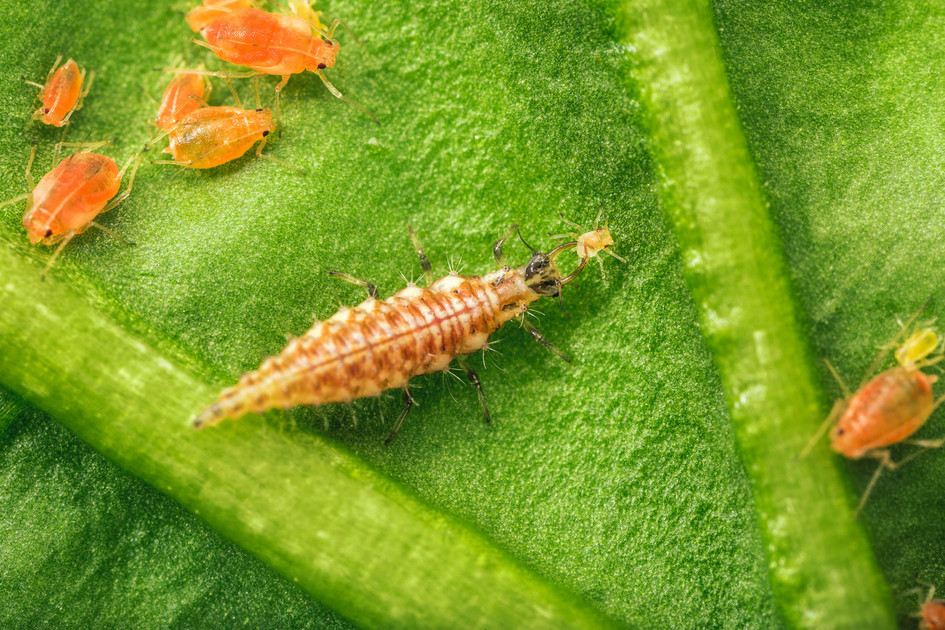
Biological pest control has become one of the most important tools in modern agriculture and horticulture. As growers move away from broad-spectrum pesticides that destabilize plant environments, biological control agents (BCAs) offer a more sustainable and predictable way to regulate pest populations. Rather than causing repeated boom-and-crash cycles, biological control creates steady ecological pressure by using natural predators, parasitoids, and entomopathogenic organisms that suppress pests through mechanisms pests cannot easily resist.
Why Biological Control Works
The effectiveness of biological control is well-documented. For example, research published in The Canadian Entomologist demonstrated that combining Amblyseius swirskii and Phytoseiulus persimilis in greenhouse cucumbers resulted in pest suppression equal to, or greater than, programs relying on 8–12 pesticide applications per season (Saber et al., 2021). Studies like this confirm that biological control is not experimental; it is a proven component of modern Integrated Pest Management (IPM) that supports healthier plants and reduces chemical dependency.
Biological Control and Selective Chemistry
Biological pest control is most successful when paired with selective, compatible sprays, particularly at the start of outbreaks. As the University of California Statewide IPM Program explains, conserving natural enemies by avoiding broad-spectrum pesticides is one of the core principles of effective pest management (UC IPM, n.d.; Utah State University Extension, n.d.). Selective sprays reduce initial pest density while protecting the biological agents that maintain long-term suppression. This combined approach forms the basis of contemporary IPM programs used in commercial greenhouses, indoor farms, ornamentals, cannabis, and even houseplant collections.
Accurate Pest Identification
Accurate pest identification is the foundation of every biological program. Spider mites create stippling, webbing, and bronzing; thrips cause silver scarring and distorted new growth; aphids leave honeydew and sooty mold; fungus gnat larvae damage roots and stunt growth. As Cornell University notes in its Biological Control resources, correct identification ensures that the chosen natural enemy is appropriate for the pest’s biology and location on the plant (Cornell CALS, n.d.). Because biological agents are often species-specific or life-stage-specific, confirming the pest type prevents wasted effort and improves success rates.
Environmental Factors and Species Performance
Once the pest is identified, growers must consider environmental factors. Predatory mites are highly sensitive to temperature and humidity. Amblyseius swirskii, the species used in Swirski-Mite Ulti-Mite, performs best in warm environments above 77°F (25°C), a performance range documented by Cornell and supported by Lee & Gillespie (2007). Neoseiulus cucumeris, the active species in Thripex, remains functional in cooler environments where thrips pressure begins early in the season, a trend supported through University of Massachusetts Greenhouse IPM research (UMass Extension, n.d.). Phytoseiulus persimilis in Spidex is a specialist predator of two-spotted spider mites that thrives in warm, humid conditions; research from UC IPM reports that P. persimilis can consume 5–20 spider mite eggs per day depending on temperature (UC IPM, n.d.).
Soil-Dwelling Agents
As part of a complete biological program, soil and media-dwelling agents are equally important. Stratiolaelaps scimitus (Entomite-M) hunts in the top layer of substrate, targeting fungus gnat larvae and thrips pupae. Its effectiveness in commercial greenhouse settings has been repeatedly documented, including in Ohio State University’s floriculture trials (Ohio State University Floriculture Program, n.d.). Dalotia coriaria (Atheta), a rove beetle, provides additional suppression of fungus gnat larvae, thrips pupae, and soil-surface pests and is widely used in combination with nematodes. Steinernema feltiae, the entomopathogenic nematode used in Entonem, is recommended by Rutgers Cooperative Extension for fungus gnat management because it infects larvae with symbiotic bacteria, often achieving high levels of suppression under moist, controlled conditions (Rutgers Cooperative Extension, n.d.).
Timing and Application
When incorporating biological agents, timing is essential. Research from the University of Minnesota Extension emphasizes that early releases—before pest densities climb—are consistently the most effective strategy for long-term success (UMN Extension, n.d.). High-pressure situations sometimes require a compatible knockdown spray first, especially for fast-moving pests like thrips or high spider-mite densities. The purpose of this spray is not to replace biological control but to reduce initial numbers so predators, parasitoids, and nematodes can establish. Extension programs across the United States emphasize avoiding broad-spectrum pesticides because they destroy beneficial organisms that would otherwise maintain ongoing suppression.
Application technique also plays a critical role in success. Predatory mites must be distributed evenly across the canopy, protected from direct sunlight during release, and introduced when foliage is dry. Soil predators and nematodes require moist substrate and should not be allowed to desiccate. Parasitoids, such as the Aphidius species sold as Aphipar, require moderate temperatures and should not be placed in direct airflow that might impede their dispersal. Matching release timing, environmental conditions, and pest pressure is what distinguishes highly effective programs from inconsistent ones.
Monitoring and Long-Term Stability
Monitoring determines whether the biological system is functioning properly. During this time, scouting should focus on signs of predator activity—such as reduced pest numbers, presence of predatory mites in sampling, parasitized aphid mummies, or decreased fungus gnat larvae in sticky-card counts. Studies have repeatedly shown that well-timed predator releases paired with consistent monitoring lead to measurable improvements in plant vigor and reduced crop losses.
Biological Control and Selective Sprays: A Balanced Approach
A persistent misconception is that biological pest control means abandoning sprays entirely. In practice, the opposite is true: the best programs combine biological agents with compatible, selective chemistry, preserving natural enemies while reducing pests at key moments. Problems arise when growers use harsh aerosols, home pesticides, or broad-spectrum products that kill both pests and beneficial organisms. When growers instead pair species like A. swirskii, P. persimilis, N. californicus, S. scimitus, C. carnea, Cryptolaemus montrouzieri, and Aphidius parasitoids with selective sprays, research consistently shows significant improvements in stability and long-term control.
The Scientific Consensus
Biological control is reinforced by decades of scientific evidence. Universities such as UC Davis, Cornell, Rutgers, Ohio State, and various European research institutions have produced extensive documentation confirming that predators, parasitoids, and nematodes can suppress spider mites, thrips, whiteflies, mealybugs, aphids, fungus gnats, and several other greenhouse pests under a wide range of environmental conditions. These findings demonstrate that biological control is a central, scientifically validated strategy for sustainable pest management in both commercial and hobbyist settings.
References
-
Saber, M. M., et al. (2021). Efficacy of Phytoseiulus persimilis and Amblyseius swirskii for integrated pest management in greenhouse cucumbers. The Canadian Entomologist.
-
Lee, H. S., & Gillespie, D. R. (2007). Temperature-dependent development and predation of Amblyseius swirskii. Journal of Applied Entomology, 131(7), 477–486.
-
University of California Statewide IPM Program. (n.d.). Biological control concepts.
-
Utah State University Extension. (n.d.). Biological control concepts.
-
University of Minnesota Extension. (n.d.). Biological control in greenhouses: Integrated pest management.
-
Cornell University CALS. (n.d.). Insect diagnostic laboratory fact sheets.
-
Ohio State University Floriculture Program. (n.d.). Floriculture & greenhouse research.
-
Rutgers Cooperative Extension. (n.d.). Beneficial nematodes for the management of fungus gnats (FS1208).
-
UMass Extension. (n.d.). Applying predatory mites in greenhouse IPM.
