
Spider Mite Webbing vs. Spider Webs: How to Tell What Is on Your Plants
Oct 15, 2025
Fine webbing on your plants is one of the most common things growers notice -- and one of the easiest to misread. Spider mite webbing and garden spider webs can look similar at a glance, but they have very different causes, very different consequences, and require completely different responses. Getting the identification right is the first step to protecting your plants.
What Spider Mite Webbing Looks Like and Why It Forms
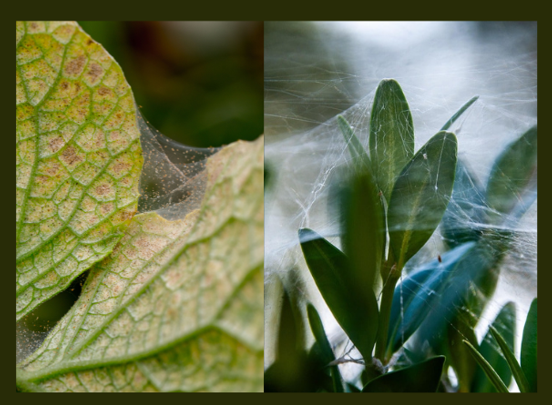
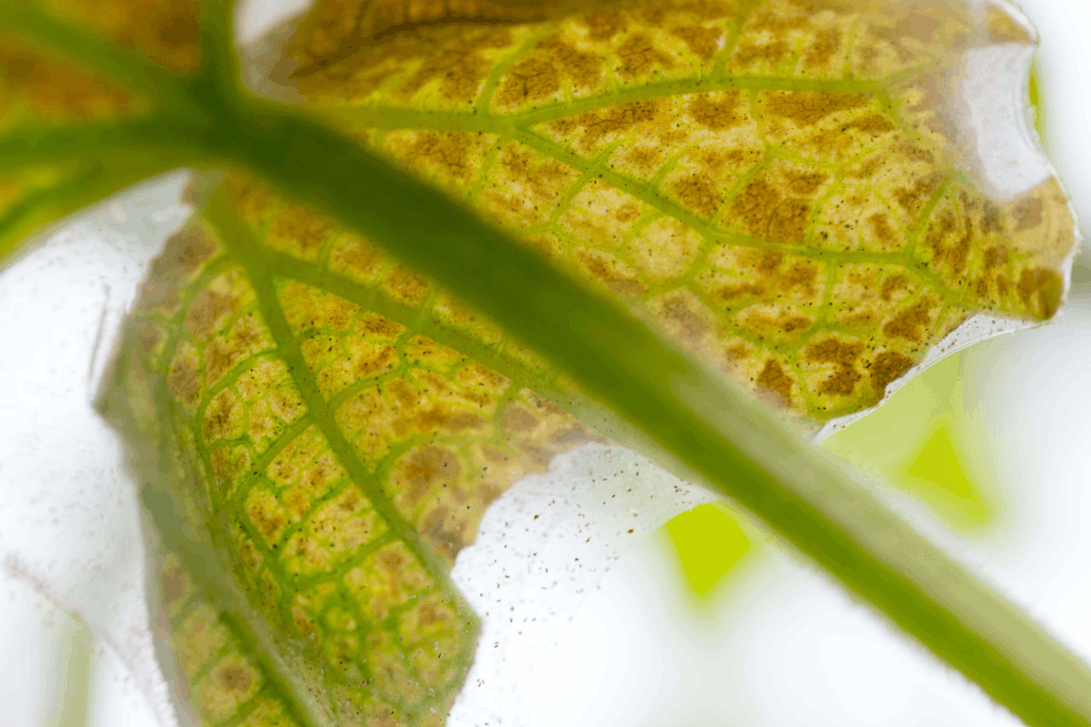
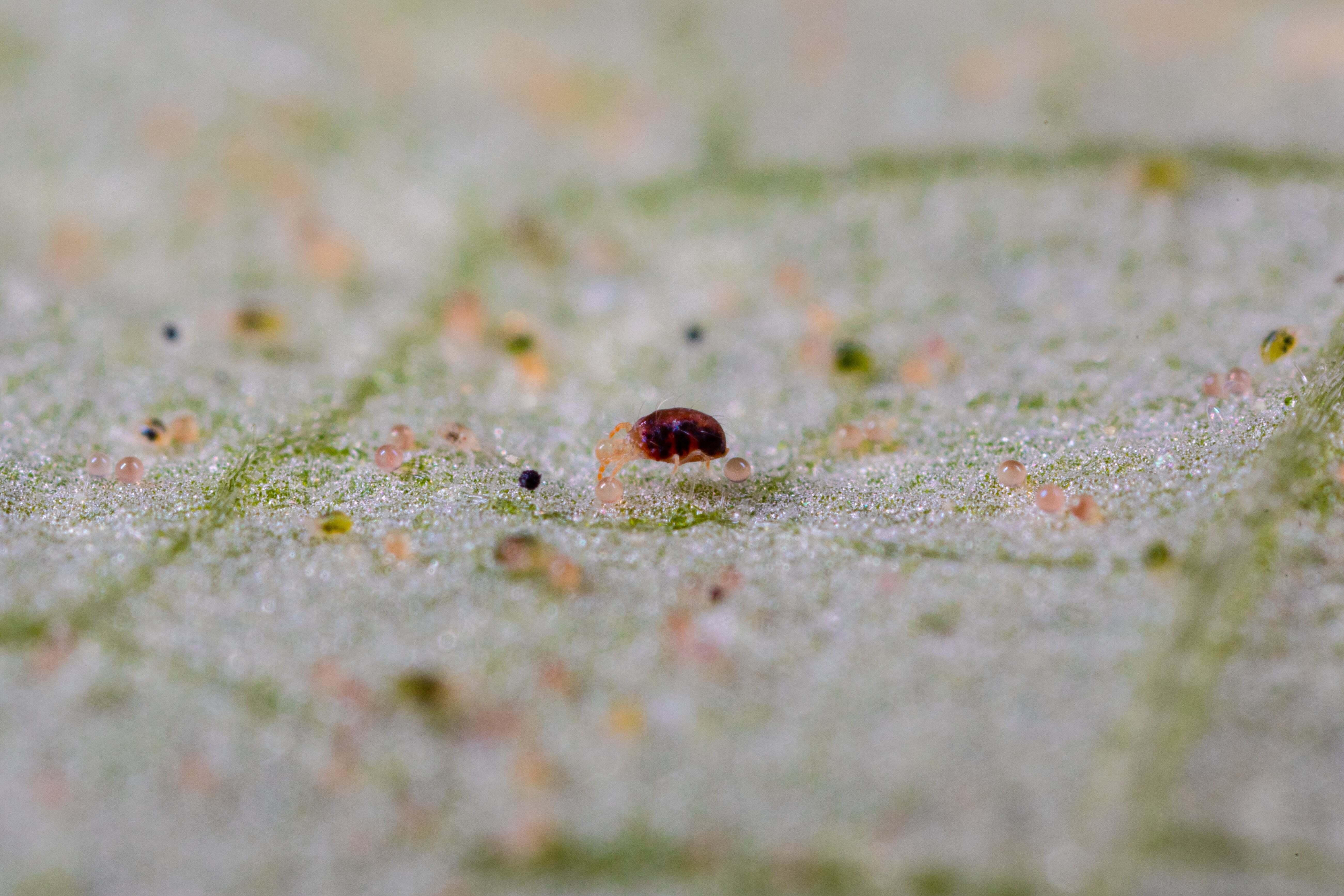
Spider mites (family Tetranychidae) are microscopic arachnids, not insects, that feed by piercing plant cells and extracting the contents. They produce fine, silky webbing as a protective structure for their colonies and eggs. This spider mite webbing appears as a sheer, dense veil stretched across the undersides of leaves, around leaf nodes, and through stem crevices. Unlike a garden spider web, it does not span open air or form geometric patterns. It clings to plant tissue and thickens as the infestation grows.
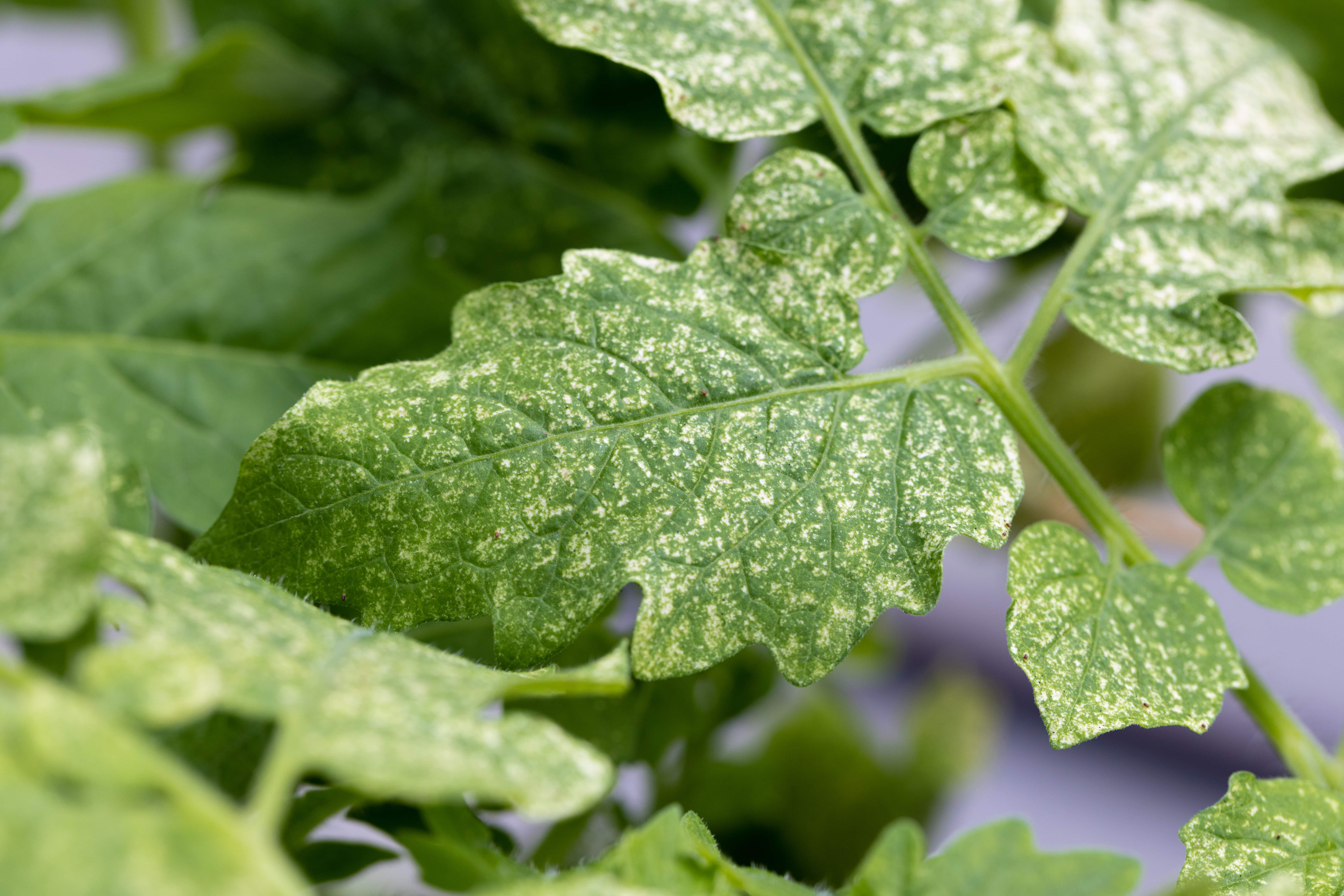
Webbing is not the first sign of spider mites -- stippling is. Look closely at the upper surface of leaves for tiny yellow or white specks where cells have been drained. As feeding continues, leaves fade from green to pale, then silvery or bronze, then yellow. New growth may pucker or stall. Buds can fail to open. As pressure builds, the fine webbing on plants thickens and can wrap around stems and growing tips, sometimes reaching the soil surface in containers. At that stage, it reduces light penetration, limits airflow, and makes surface treatments far less effective. Catching stippling before visible webbing spreads is the most reliable cue to act. For more on spider mite control options, including biological solutions for every environment, see the full pest guide.
What Garden Spider Webs Look Like and Why They Are Different
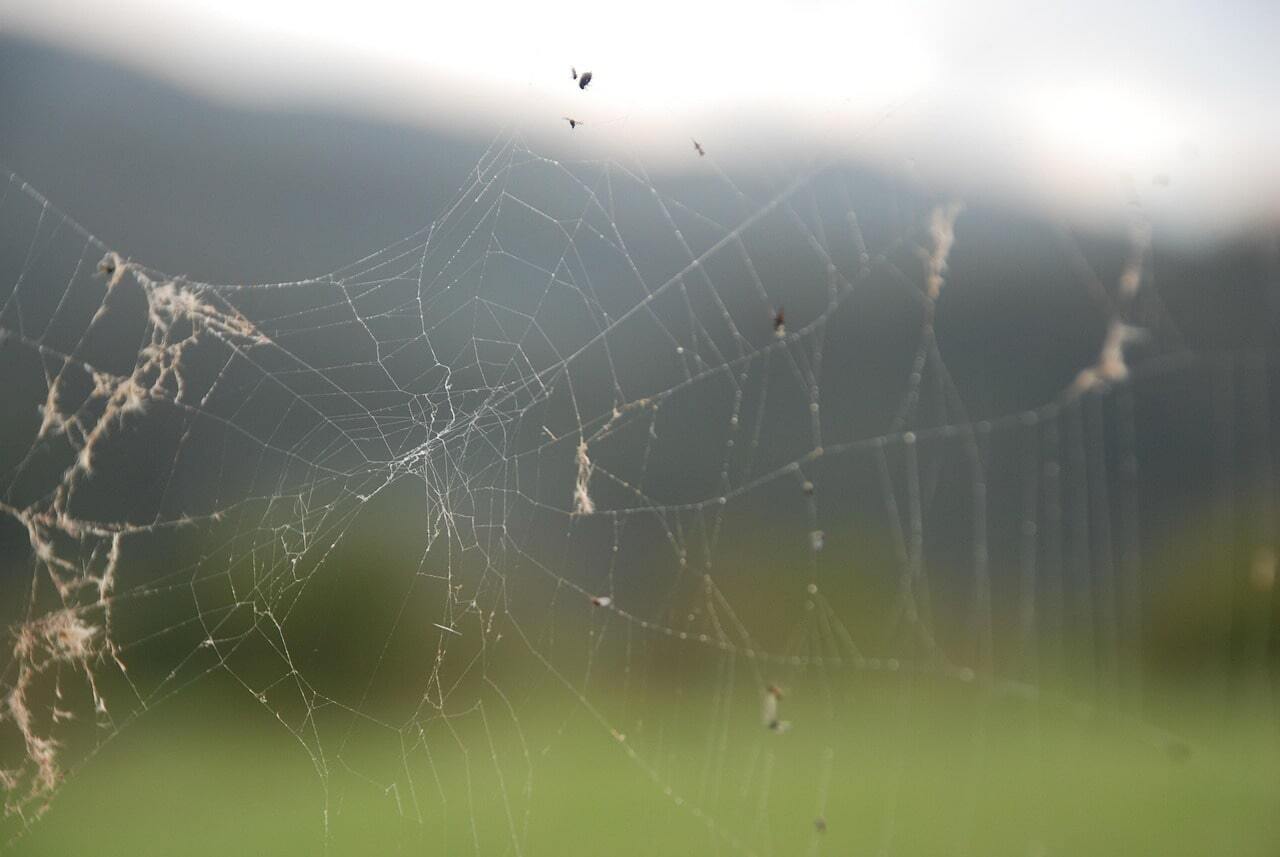
Spiders (order Araneae) are beneficial predators in most growing environments. Their webs are built to trap prey, not to protect colonies. A garden spider web is geometric, often orb-shaped or layered, and spans open spaces between branches or across gaps in the air. It is sticky, structured, and typically includes a spider waiting nearby. It does not cling to leaf surfaces, wrap stems, or appear on the undersides of leaves. There is no associated leaf damage, no stippling, and no yellowing.
Garden spider webs are especially visible in early morning dew and appear more frequently in autumn, which is exactly when spider mite webbing also tends to be heavy. The simplest way to distinguish them: look for the spider. Garden spider webs almost always have one nearby. Spider mite webbing never does -- at least not one you can see without magnification.
How to Tell Spider Mite Webbing from a Garden Spider Web
| Feature | Spider Mite Webbing | Garden Spider Web |
|---|---|---|
| Purpose | Protection for mite colonies and eggs | Trap for prey |
| Location | Undersides of leaves, leaf nodes, stems | Between branches, spanning open air |
| Appearance | Fine, dense, veil-like | Structured, geometric, sticky |
| Associated damage | Stippling, yellowing, leaf drop | None |
| Spider present | No visible spider | Usually visible nearby |
Still unsure? Shake the plant gently over a sheet of white paper. If tiny moving specks appear, you are looking at spider mites. A hand lens confirms the ID. This simple diagnostic works at any stage, including before webbing has formed.
Do Other Pests Make Webs on Plants?
Aphids, thrips, and mealybugs do not spin webs. If you are seeing fine webbing on plant leaves, spider mites are the most likely cause. Mealybugs produce a white waxy material that can resemble fine webbing or cotton at a glance, but it does not form threads or cover leaf surfaces the way spider mite webbing does. Aphids produce honeydew and sometimes attract sooty mold, but no web structure. Thrips cause silvery streaking and distorted tissue, but again, no webbing. If you see webbing and cannot find a spider, treat it as spider mites until confirmed otherwise.
What to Do When Spider Mite Webbing Appears
Spider mite populations build quickly in warm, dry conditions. A small hotspot can spread across a crop or collection if left unaddressed. The most effective approach combines scouting, environmental adjustments, and biological control for spider mites deployed before populations peak. Scout regularly under leaves and around new growth. Increase humidity where possible -- mites slow their reproduction in moister air. Avoid broad-spectrum pesticides that eliminate the natural predator populations that would otherwise keep mites in check.
Biological Control for Spider Mite Webbing: Choosing the Right Solution
Predatory mites are the front line of biological control for spider mite webbing and the colonies behind it. Choosing the right species depends on the environment, the scale of the problem, and whether other pests are present alongside spider mites.
For active spider mite colonies with visible webbing, Spidex Vital contains Phytoseiulus persimilis, a fast-acting predatory mite that feeds exclusively on spider mites at all life stages. It performs best in warm conditions with moderate to high humidity and works directly into established colonies. For environments with wider temperature variation, or where the mite species is not confirmed as spider mite, Spical is a more versatile option.
For preventative coverage and early-season protection before webbing develops, Spical Ulti-Mite sachets contain Neoseiulus californicus and provide sustained release over several weeks. When spider mites are appearing alongside thrips or whitefly, Swirskii can address all three simultaneously. For early hotspot detection across a larger growing area, Spidend (Feltiella acarisuga) -- a gall midge whose larvae consume spider mites at all stages -- is highly mobile and actively seeks out problem zones. Spidend performs well between 68 and 80 degrees F with adequate humidity.
For growers who need to spray while maintaining biological control, Isarid is a fungal-based mycoinsecticide compatible with beneficial insects and predatory mites, making it a strong fit for integrated pest management programs targeting spider mites.
Frequently Asked Questions About Spider Mite Webbing
Do spider mites make webs on plants? Yes. Spider mites spin fine, protective webbing on the undersides of leaves, around leaf nodes, and sometimes across stems and the soil surface of containers. The webbing shelters their eggs and feeding colonies and is a reliable indicator of active mites.
What does spider mite webbing look like? Spider mite webbing is fine, silky, and dense -- similar to a sheer veil stretched across plant surfaces. It is most visible on leaf undersides and around stem nodes. It does not form geometric patterns and does not span open air the way a garden spider web does.
Can spider mite webbing harm plants? Yes. The webbing blocks light and airflow, but the more direct damage comes from the feeding that produces it. Spider mite feeding leads to stippling, leaf yellowing, curling, and eventual leaf drop. Heavy infestations can significantly reduce plant vigor.
How fast do spider mite populations build? Under warm, dry conditions spider mite populations can build rapidly, with a full generation completing in as little as one to two weeks. Early identification and action is important because populations that are small and localized can spread across a growing space within a few weeks if untreated.
Can I just wash off the spider mite webbing? Rinsing plants with water can reduce mite numbers and remove some webbing, but it does not eliminate the problem. Mites and eggs often remain hidden in crevices. Follow rinsing with thorough scouting and appropriate biological control.
Do garden spiders help control spider mites? Garden spiders are generalist predators and do not specifically target spider mites. Their presence indicates a functioning ecosystem, which is a positive sign, but they are not an effective tool for bringing a spider mite infestation under control.
Do aphids or thrips make webs on plants? No. Aphids, thrips, and mealybugs do not spin webs. Fine webbing on plant leaves is most commonly caused by spider mites. If you see webbing and no spider, scout for mites before assuming another cause.
What is the best treatment for spider mite webbing? The most effective approach is biological -- predatory mites such as Phytoseiulus persimilis or Neoseiulus californicus target spider mites directly. Combining predatory mite releases with humidity management and regular scouting gives the best long-term results. See the full guide to choosing the right predatory mites for mite control.
Related Articles
How to Solve Spider Mites - complete guide to biological control across all environments.
How to Tell Between Spider Mites, Broad Mites, and Russet Mites - diagnostic guide when the mite species is uncertain.
Choosing the Right Biological Control: Predatory Mites - how to select the right predatory mite for your situation.
