
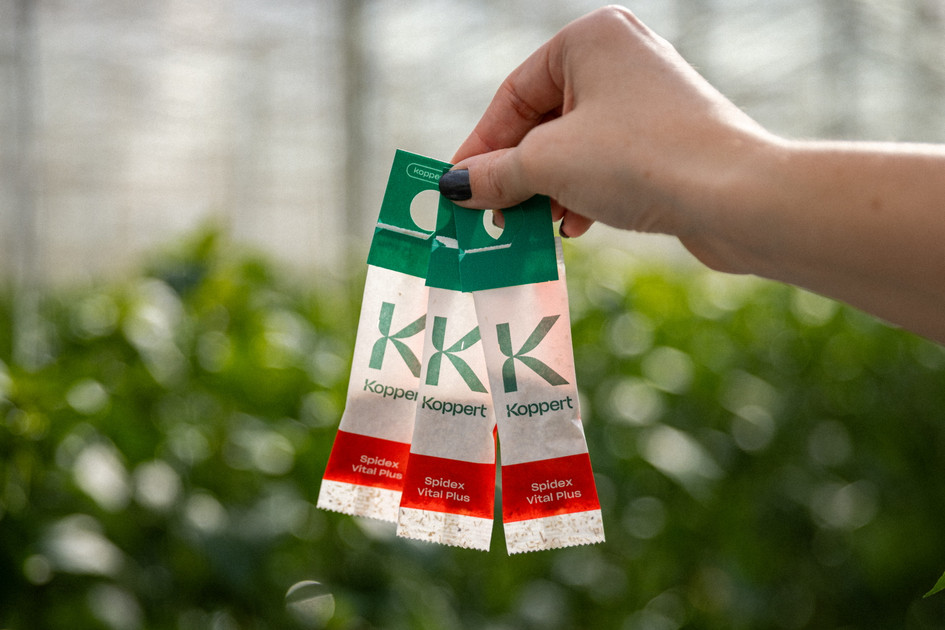
Beneficial Mite Sachets: How They Work and When to Use Them
Jan 12, 2026
Beneficial mite sachets are one of the most reliable and labor-efficient tools for maintaining continuous biological control in greenhouse crops, interiorscapes, and houseplants. Rather than relying on repeated broadcast releases, sachets provide a steady, controlled release of predatory mites directly into the crop canopy over an extended period. This guide explains how beneficial mite sachets work, why they are effective, and how to choose the right sachet type based on crop structure, humidity, and pest pressure, without unnecessary technical complexity.
- Starting a new growing cycle? Begin with Ulti-Mite sachets for steady release.
- Seeing spider mite pressure? Add Spical Ulti-Mite sachets for ongoing suppression.
- Need fast action? Choose Spidex Vital GO for quick-release programs.
What Are Beneficial Mite Sachets?
Beneficial mite sachets are small, breathable packets that contain live predatory mites along with the resources they need to survive and reproduce inside the sachet. Once placed in the crop, the sachet releases mites gradually over several weeks. This slow-release system keeps predators close to the plant canopy, where pests such as thrips, whiteflies, and spider mites typically develop.
Because sachets release mites continuously rather than all at once, they reduce the need for frequent labor-intensive applications. They also protect mites during the most vulnerable stages of establishment by buffering them from direct water contact, condensation, and sudden temperature changes that often occur in production environments.
Why growers choose sachets:
- Continuous release for 4–6 weeks
- Reduced labor compared to repeated broadcast applications
- Protection for mites against harsh microclimates
Why Sachets Work in Biological Control Programs
Successful biological control depends on timing, consistency, and maintaining predator presence before pest pressure escalates. Sachets address these challenges by providing a sustained release of predatory mites for approximately four to six weeks, depending on environmental conditions. This continuous emergence smooths out fluctuations in predator populations and helps prevent pest pressure from gaining momentum.
From a labor perspective, sachets simplify implementation. Once hung or placed, they function autonomously, reducing the need for repeated broadcast releases. From a biological standpoint, sachets create a more stable microclimate for predatory mites, improving survival and establishment compared to exposed, single-release applications.
- Continuous release: Mites emerge gradually, smoothing out population spikes.
- Labor savings: Hang once, and sachets do the work for weeks.
- Microclimate fit: Sachets shield mites from condensation and temperature swings, improving survival.
Types of Sachets and When to Use Them
Different sachet designs are optimized for different growing conditions, particularly humidity levels, crop density, and production timelines.
Ulti-Mite sachets are designed for humid environments and crops with dense canopies. The sachet material resists condensation buildup and helps maintain a stable internal environment, making these sachets well suited for warm, humid greenhouses and tightly spaced crops where moisture levels fluctuate.
PLUS sachets are intended for moderate humidity and standard greenhouse conditions. They offer flexibility across a wide range of ornamental and vegetable crops and are commonly used as a baseline biological control tool in long-cycle production systems.
GO sachets are designed for fast-start programs and short crop cycles. They release predatory mites more quickly, making them appropriate when immediate pressure reduction is needed or when crop turnover does not allow time for slower establishment.
Placement and Spacing for Best Results
Correct placement is critical for sachet performance. Sachets should be hung or positioned inside the plant canopy, where predators can move directly onto leaves and stems. Direct contact with irrigation water should be avoided, as excessive moisture can reduce sachet longevity. For short crops, propagation trays, or bench production, sachets mounted on sticks allow precise positioning at canopy level.
Spacing should be adjusted based on crop density and structure. In ornamental crops, a common starting point is approximately one sachet per three to four square feet. Dense propagation trays or tightly packed crops may require closer spacing to ensure uniform predator distribution and consistent coverage across the planting.
Sachets Compared to Broadcast Applications
Sachets and broadcast applications serve different but complementary roles in IPM programs. Sachets are most effective as a preventative or baseline tool, maintaining a steady predator population that suppresses pest pressure before hotspots develop. Broadcast releases remain valuable when scouting identifies localized pressure increases that require a rapid boost in predator numbers.
Many successful programs combine both approaches. Sachets provide continuity and stability, while broadcast applications are used strategically to respond to spikes in pest activity without disrupting the established biological balance.
Choosing the Right Sachet for Your Program
Check out our straight-forward guide for choosing the right solution here;
Choosing the Right Biological Control: Predatory Mites for Mite & Insect Control
FAQ
How long do sachets last?
Sachets release mites for 4–6 weeks, depending on conditions. For cannabis growers we recommend replacing at 3 weeks for layered control.
Can I combine sachets with bottle applications?
Yes. Sachets maintain a steady population, while bottle releases boost numbers during high-pressure periods.
Do sachets work in houseplants?
Absolutely. They are discreet and effective for indoor environments, making them ideal for home growers and interiorscapes.
Which sachet type should I choose for high humidity?
Ulti-Mite sachets are designed for a myriad of conditions and work in both high and low humidity.
What if my crop cycle is short?
Use GO sachets for quick-release programs that deliver mites fast.
