
All About Citrus Mealybugs
Jan 21, 2026
What Does a Citrus Mealybug Look Like?
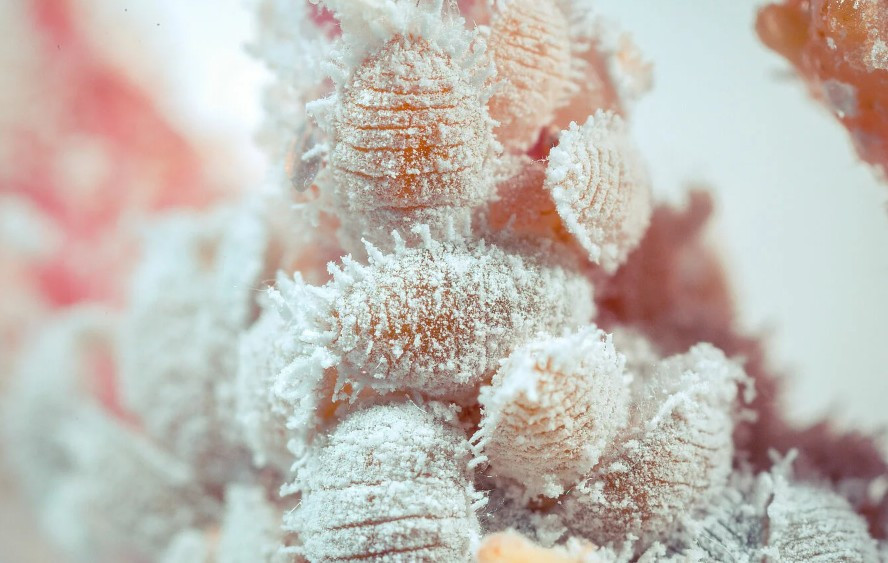
The citrus mealybug (Planococcus citri) has a world-wide distribution and many and diverse host plants. In temperate regions of the world this mealybug poses a problem in greenhouse horticulture, and in the tropics and sub-tropics on outdoor crops. The insect causes damage especially in fruit trees and ornamental crops, particularly in pot plants such as ficus, palms, schefflera, croton and kalanchoë, but also in roses and gerbera. Additionally, the citrus mealybug (Planococcus citri) can also appear in cucumber, melon and aubergine. An adult Citrus Mealybug is about 1/5 of an inch long, making it visible to the naked eye. They have a white, waxy coating and an oval-shaped body. Nymphs and eggs both look slightly different, but as with most plant pests, magnification is crucial to be 100% sure of what you are dealing with.
What Is The Lifespan of Mealybugs?
Given optimal conditions (approximately ~75 °F & high humidity), Citrus Mealybugs can hatch from their egg in 6-10 days. Once they reach adulthood, which can occur in as little as four weeks, each female can lay up to 600 eggs and can live for several weeks, laying hundreds of eggs during that time.
Adult females of Planococcus citri are 2.5 - 4 mm long and 2 - 3 mm in breadth. Seen dorsally, they have an oval form; they are soft and covered with a fine waxy material. They move very little. They can be distinguished from other mealy bugs by their possession of 18 pairs of relatively short wax rods round the edge of the body, and two slightly longer ‘tail filaments’ . The tail filaments are always shorter than 20% of body length. They produce little wax, so that the light yellow to pink body is visible through its waxy covering. There is often a darker longitudinal stripe running over the body.The adult males are short lived and can be hard to spot. They are smaller than the females, have two pairs of wings and two long tail filaments. Their sole task is to fertilize the females and as soon as a male emerges from its cocoon, it goes in search of a female. A fertilized female lays several hundreds of eggs in an elongated cottony egg sac composed of white waxy threads. Once the eggs are laid, the female shrivels up and dies. The first instar nymph develops from the egg. These first instar nymphs are known as ‘crawlers’. They are highly active in their search for a new feeding place and are capable of moving a reasonable distance over the plant. The male nymph attaches itself to the plant, whereas the females remain mobile throughout their entire development. After the second instar, a male nymph forms a dark brown ‘prepupa’ from which a pupa rapidly develops, inside a white cottony cocoon. Females undergo little changes in form, passing through a second and third instar after which they become sexually mature. Soon after becoming an adult the females start to release a sex pheromone to attract males. Males generally fly only in the early morning.
An Integrated Pest Management strategy can help keep the mealybug under control while implementing effective practices to prevent the pest from appearing again. We are happy to help you on your journey to a pest and pesticide-free cultivation!
How Do I Know if I Have Mealybugs & How Do I Assess the Severity?
The damage caused by mealybugs is very characteristic and appears as white, cotton-like masses on the leaves and stems, resulting from the mealybg feeding on the plant sap. Honeydew produced by adults and nymphs is also a red flag, often leading to sooty mold growth.
The most common mealybug species in agricultural and horticultural facilities is the Citrus Mealybug, Planococcus citri. Populations of mealybugs can best be categorized in three levels: Low, Medium, and High, or 1, 2, and 3, respectively.
Level 1 mealybug population indicates one or two adult or nymph mealybugs on a leaf with minimal damage observed.
Level 2 indicates larger populations on a leaf, consisting of all life stages (egg, larvae, nymph, adult), and more obvious damage symptoms are present.
Finally, level 3 indicates a full-out problem with significant damage and all stages of the life cycle present.
How Do You Get Rid of Mealybugs?
Introduce predatory insects that are natural enemies of mealybugs, such as Cryptolaemus montrouzieri (mealybug destroyer) and/or Chrysoperla carnea, depending on the level of infestation and crop type.
Cryptolaemus montrouzieri is a great mealybug predator as it feeds voraciously on mealybugs and scale. This voracious predatory beetle can easily traverse the plant. When introduced preventatively or in great enough numbers, Cryptolaemus montrouzieri will eventually eat every mealybug on a plant, crashing both the problem population and then its own. Cryptolaemus montrouzieri feeds on all stages of mealybugs with a preference for eggs.
What Causes Mealybugs?
Mealybugs are a cosmopolitan pest of plants that occur in every temperate region in the world. There are several reasons why mealybugs appear in the crop:
-They can easily be brought into a facility on propagated plant material or employees' clothing.
-They can enter through the air on small strands of webbing they use as a sail to distribute on wind currents.
-Mealybugs look for warm, humid conditions.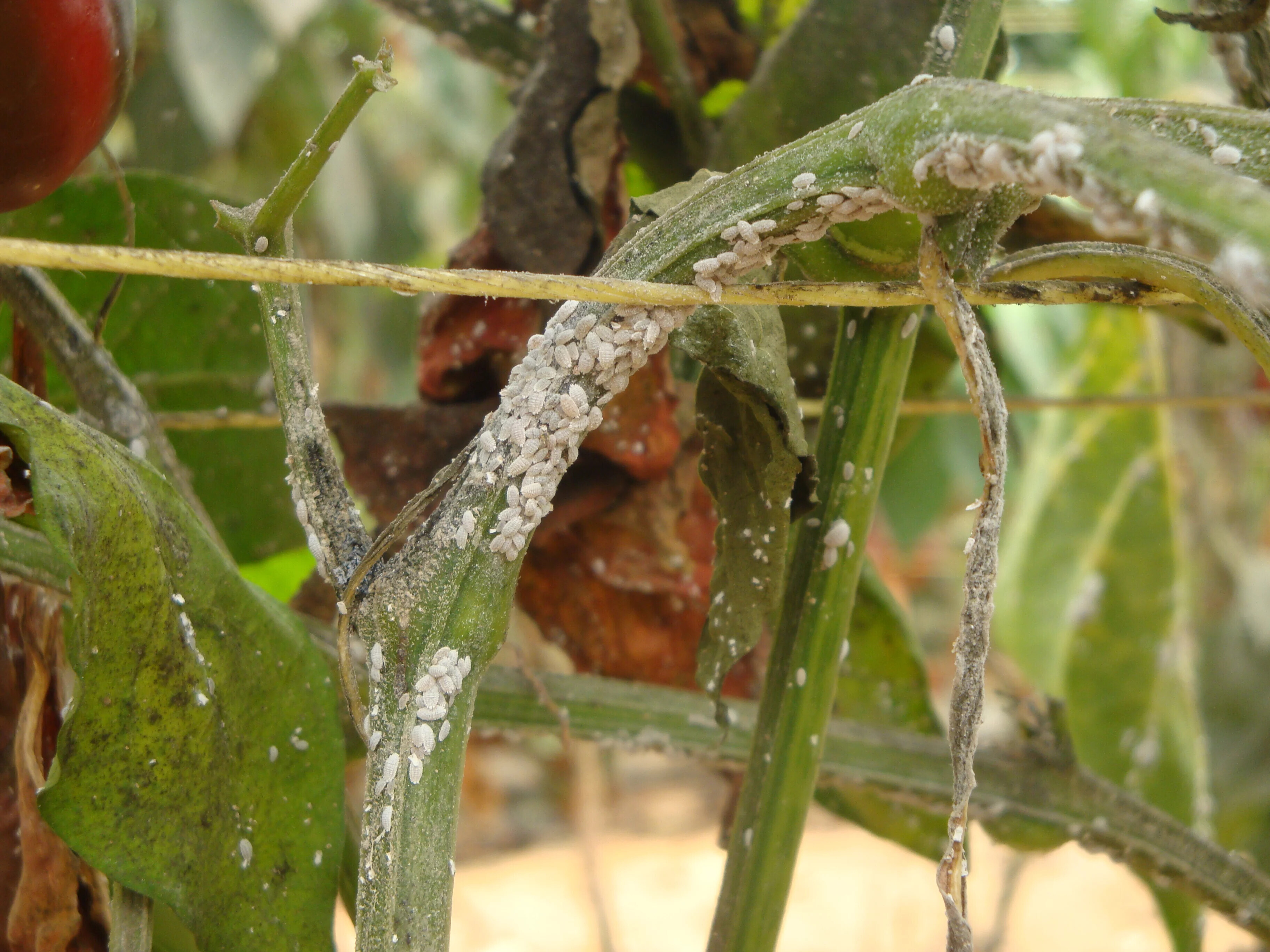
How Do You Control Citrus Mealybugs?
There are many approaches for effective citrus mealybug control, but the method of choice will largely depend on the variables that are unique to the crop needs.
In general, for a curative approach to controlling an established population of mealybugs during the vegetative or early-flower period, you might want to introduce predatory beetle Cryptolaemus montrouzieri (Cryptobug) or its larvae (Cryptobug-L).
If you have dealt with citrus mealybugs in the past and are looking for a preventative, natural enemy Chrysoperla carnea (Chrysopa)is a great option as well.
The approach to choose will depend on the growing situation, so if you'd like further assistance choosing the right product for you, please contact our live chat service!
What Are The Signs of Mealybugs?
Although most species of mealybug feed on the aerial parts of the plant, some species extract their nourishment from roots, whilst others are gall-formers. A few species can also transmit harmful viruses.
Mealybugs inflict damage on the crop in various ways:
Nymphs and females extract the sap from the plant, stunting growth and causing deformation and/or yellowing of leaves, sometimes followed by defoliation. The overall effect is a reduction of photosynthesis and therefore the yield. Flowers and fruit often drop off. After feeding on the plant sap, Citrus Mealybug leaves behind what people often describe as 'cottony' or 'waxy' masses on the plant surface. The honeydew they produce can lead to sooty mold growth, which is another clear indication of their presence.
Plant sap is rich in sugars, but low in proteins. In order to gain an adequate intake of protein, mealybugs must therefore ingest large quantities of sap, getting rid of the excess sugars in the form of honeydew. Characteristically, dark sooty moulds (Cladosporium spp.) are often found growing on this honeydew. Additionally, the white, waxy secretion of the mealybugs, reduces the ornamental value of the affected plants. Fruit and flowers are also fouled, rendering them unfit for sale, and the reduced level of photosynthesis in the leaves also reduces flower and fruit production.
In ornamental crops, the mere presence of mealybugs is sufficient to render the product unfit for sale. A very small population can thus cause considerable economic damage.
